 Save
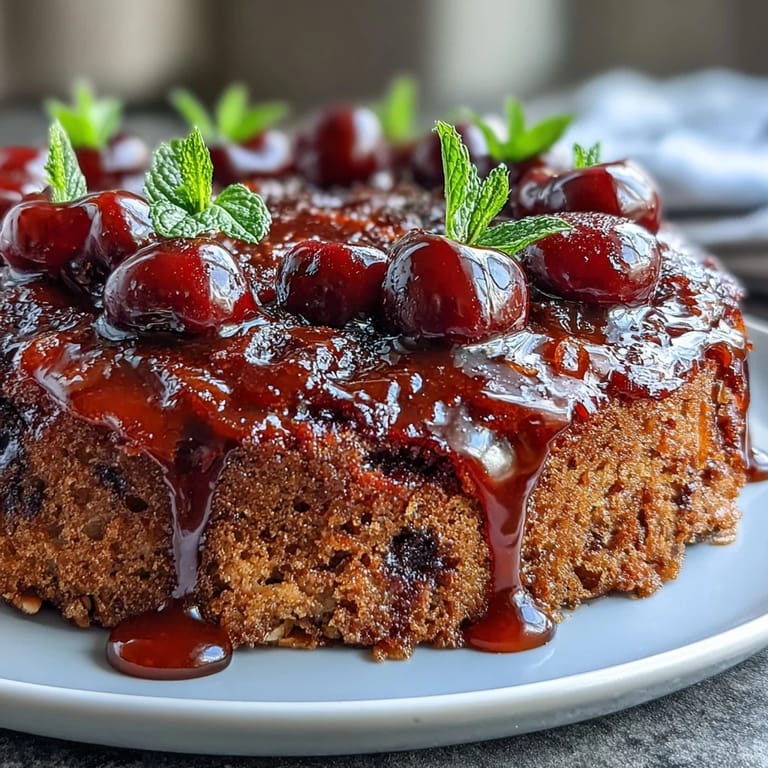
Save There is something playful about tipping a cake upside-down and unveiling its glossy jewel-toned fruit crown. The first time I tried making a cherry almond upside-down cake, I was drawn in by the sizzling scent of butter and brown sugar bubbling on the stove, quickly overtaken by the sweet promise of cherries and just a whiff of almond in the air. Sometimes that waft makes me pause and smile, because it conjures the feeling of anticipation more than any other dessert I bake. It’s a project that looks impressive but feels quietly calming to assemble, especially on a cloudy afternoon. Even if you’re not usually a confident baker, you may find this one is as reassuring as it is beautiful.
On a rainy Saturday, I made this cake while friends played cards at the kitchen table. The gentle clatter of mixing bowls mixed with their laughter, and I overheard more than one hopeful whisper about who would get the biggest cherry slice. It felt like the sort of everyday moment that deserved a little celebration but didn’t call for anything too fussy. The simple act of peeling back the parchment and smelling the caramelized fruit was a small victory for all of us. Nobody waited for the cake to cool completely—we went in for slices while it was still warm, which I highly recommend.
Ingredients
- Fresh or frozen cherries: Their tart sweetness balances beautifully with the cake and, if frozen, just thaw and drain them to avoid excess moisture.
- Unsalted butter: Used in both the caramel and the batter, it brings a rich backbone—room temperature butter creams best for a fluffy cake.
- Brown sugar: Melts into a syrup that soaks into the cherries, creating a sticky, almost toffee-like topping.
- All-purpose flour: Gives the cake structure—measure with a spoon and level for best results.
- Ground almonds (almond meal): Adds subtle nutty flavor and a moist, tender crumb; I learned it’s worth tracking down rather than skipping.
- Baking powder: Responsible for that gentle lift in the cake so it’s never dense or stodgy.
- Salt: A pinch wakes up all the flavors and keeps the cake from veering into one-note sweetness.
- Granulated sugar: Lightens and sweetens the cake batter—creaming it well with butter is key for a delicate crumb.
- Eggs: Binds the batter and adds richness—room temperature helps everything mix smoothly.
- Whole milk: Keeps the cake tender and moist; if you use skim or a milk alternative, the texture changes slightly but is still delicious.
- Vanilla extract: Gives the base cake a comforting warmth that makes the almond pop.
- Almond extract: Just a little goes a long way; too much can overwhelm, so measure carefully for that perfect aromatic note.
Tired of Takeout? 🥡
Get 10 meals you can make faster than delivery arrives. Seriously.
One email. No spam. Unsubscribe anytime.
Instructions
- Set the scene:
- Preheat your oven to 180°C (350°F), butter a 23 cm (9-inch) round cake pan, and line the bottom with parchment to ensure a smooth reveal later.
- Make the caramel:
- In a small saucepan, melt 60 g butter on medium heat, stir in brown sugar, and let it bubble until everything looks silky; pour it into your prepared pan and breathe in that butterscotch aroma.
- Arrange your cherries:
- Spread the cherries in a single layer atop the warm caramel, tucking them in gently for maximum fruit coverage—imagine the stained glass window effect.
- Blend the dry:
- In a bowl, whisk together flour, ground almonds, baking powder, and salt until evenly combined—no clumps allowed.
- Whip the wet:
- Cream softened butter and granulated sugar together with a mixer until pale and fluffy, then add eggs one at a time, followed by vanilla and almond extracts for that dreamy aroma.
- Assemble the batter:
- Add dry ingredients to the wet mix in three parts, alternating with milk and finishing with the dry—stir just until there are no dry streaks left, keeping it gentle.
- Layer and smooth:
- Scoop the cake batter over the cherries and spread it gently with a spatula, being careful not to disrupt your careful pattern below.
- Bake and test:
- Bake for 35–40 minutes; when a skewer poked in the center comes out clean and the surface is golden, you’re good.
- Turn and reveal:
- Let the cake rest in the tin for 10 minutes, run a knife around the edge, then invert it with confidence onto a plate—slowly peel off the parchment for maximum drama.
- Serve it right:
- Enjoy warm or at room temperature (ice cream or whipped cream doesn’t hurt), especially when the caramel’s still sticky and the cherries shine.
 Save
Save  Save
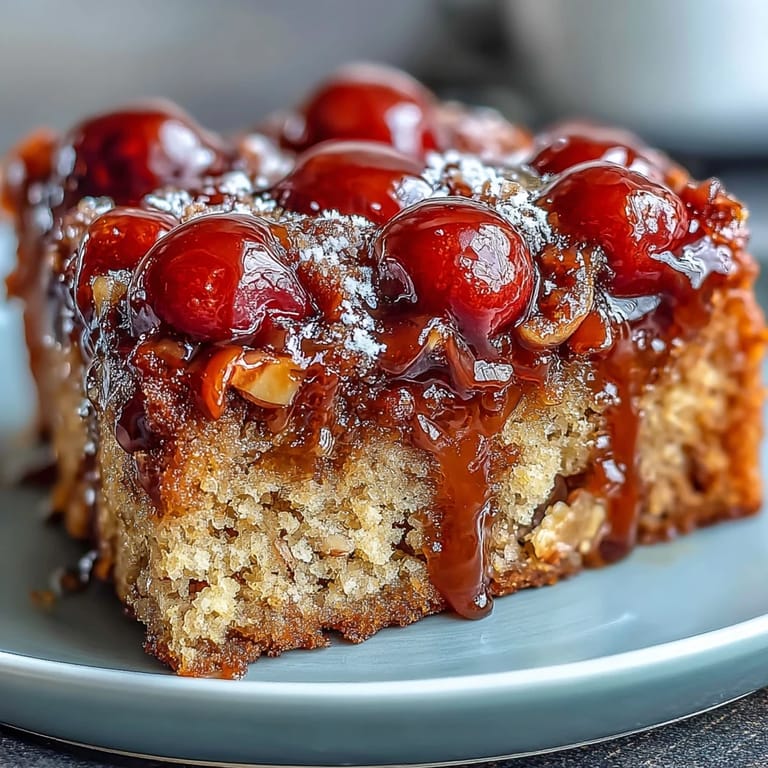
Save I’ll never forget slicing into this cake as the last embers of sunlight filled the room and everyone leaned in for a better look at the glossy cherry topping. At that moment, someone quietly murmured, This is almost too pretty to eat, and it hit me how a simple home-baked cake can make a gathering feel special.
Choosing Between Fresh and Frozen Cherries
Both types work beautifully: fresh bring tartness and a firmer bite, while frozen yield irresistible juiciness. If you opt for frozen, always thaw and drain thoroughly—otherwise, your topping may turn runny and flood the cake. Canned (drained) are a fine alternative in a pinch, but nothing compares to how whole, round fresh cherries burst in your mouth. I’ve found the easiest way to pit mountains of cherries is to call for volunteers and offer them a slice of cake as a reward. Even a quick rinse and pat dry can make a difference in how perfectly the fruit sets.
Let’s Talk About Almond Flavor
I used to think almond extract was optional, yet now I reach for it every time. Just three-quarters of a teaspoon is enough to perfume the whole cake, giving it that little something that always earns recipe requests. Too much and the cake can taste almost medicinal, so measure it carefully and mix it thoroughly for even flavor. If allergies are a concern, substitute the ground almonds with equal flour and skip the extract—still delicious, different personality. It’s this hint of almond that transforms a good cake into an unforgettable one.
Serving and Storing for Maximum Enjoyment
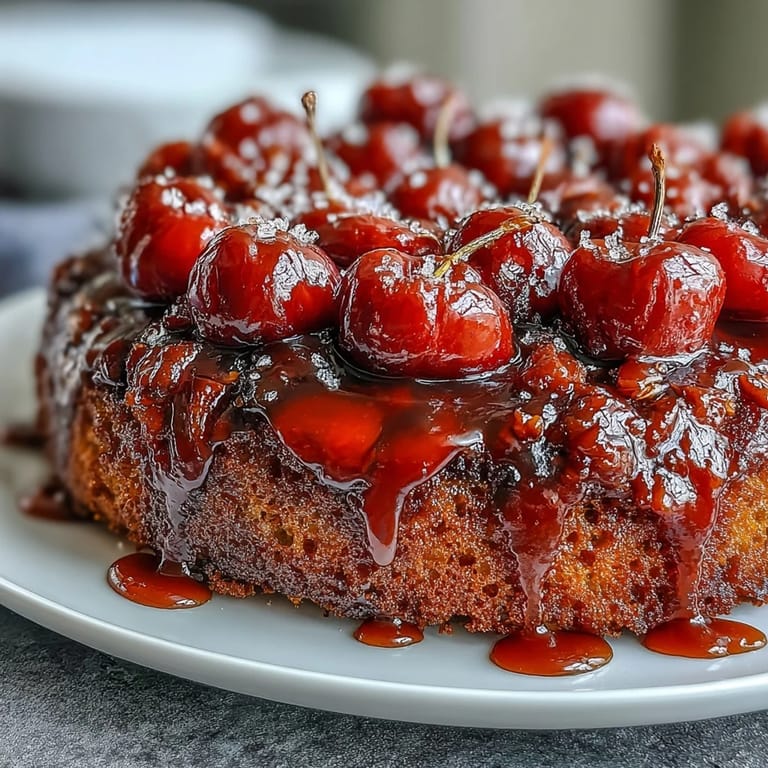
Upside-down cake is best slightly warm, when the caramel is sticky and the cherries glisten. To rewarm, a few seconds in the microwave brings back its soft, pillowy crumb and revives the aroma. Store leftovers covered at room temperature for up to two days, but I doubt it’ll last that long. Whipped cream and ice cream are the classic partners—but surprise yourself and try it with crème fraîche once.
- Save the cake pan for easier storage and travel.
- Dusting the top with a little powdered sugar before serving adds a bakery touch.
- If you have leftovers, try toasting a slice in a nonstick pan—it’s outrageously good.
 Save
Save 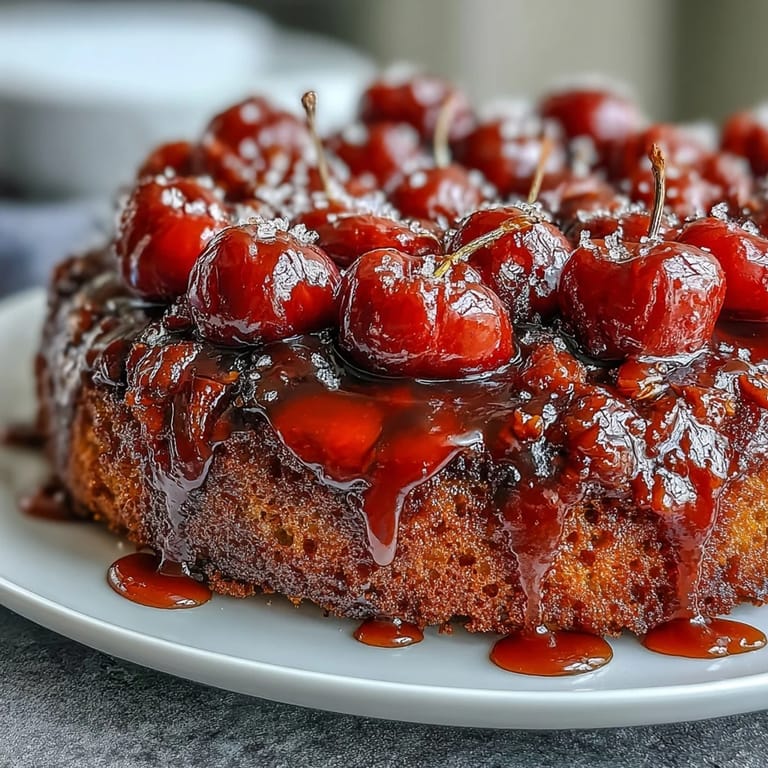 Save
Save I hope you find this cherry almond upside-down cake brings as much delight and fragrant magic to your table as it does to mine. May each flip reveal something deliciously beautiful, every single time.
Recipe FAQ
- → Can I use frozen cherries instead of fresh?
Yes. Thaw and drain frozen cherries well to avoid excess moisture. Pat them dry before arranging over the caramel so the topping sets properly during baking.
- → How do I prevent the cherries from sticking to the pan?
Grease the pan thoroughly and line the bottom with parchment paper. Pour the hot butter-and-brown-sugar mixture evenly before arranging cherries to create a nonstick caramel layer that releases cleanly when inverted.
- → How can I tell when the cake is done?
Insert a skewer into the center; it should come out clean or with a few moist crumbs. The top (when inverted) should be glossy and the cake edges lightly golden. Bake 35–40 minutes as a guideline.
- → What's a good nut-free substitute for ground almonds?
Replace ground almonds with an equal weight of all-purpose flour. The texture will be slightly less tender and less nutty, so consider adding a teaspoon of extra vanilla to boost flavor.
- → How should I store leftovers and reheat them?
Store cooled cake covered in the refrigerator for up to 3 days. Reheat slices gently in a low oven (150–160°C / 300–325°F) for 8–10 minutes or briefly in the microwave to restore warmth before serving.
- → Can I use other fruits instead of cherries?
Yes. Firm stone fruits such as plums or apricots, or halved peaches, work well. Adjust sugar in the caramel if using very sweet fruit and ensure even thickness when arranging in the pan.


