 Save
Save My neighbor Maria showed up one afternoon with a jar of chimichurri and a knowing smile, insisting I stop making boring pasta. She practically commandeered my kitchen, grilling chicken while that green sauce perfumed everything with garlic and herbs, and honestly, I've never looked back. There's something about how that bright, peppery sauce cuts through tender chicken and soft pasta that feels both simple and somehow celebratory. It became my go-to when I wanted to feel like I'd done something special without actually stressing about it.
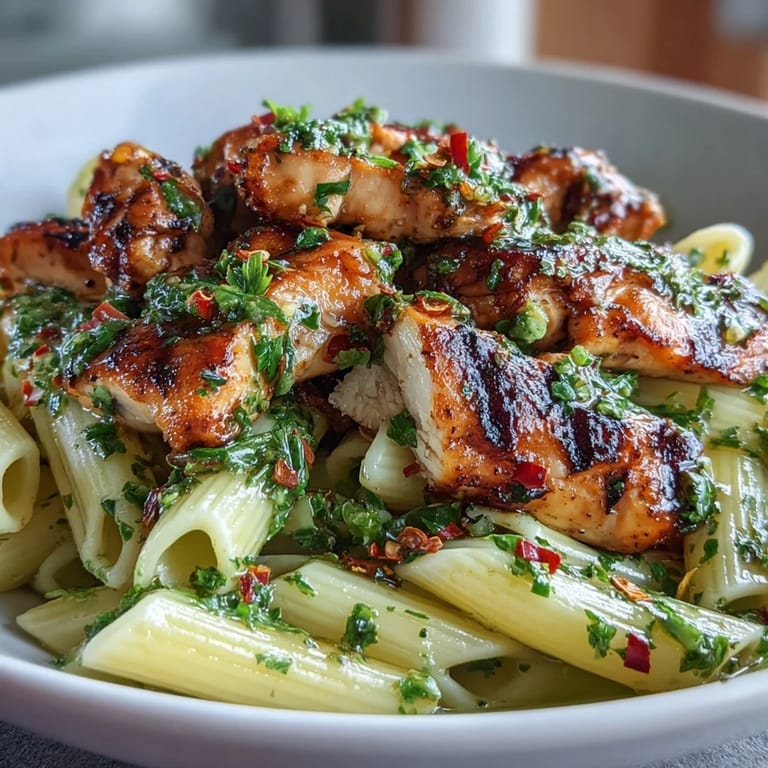
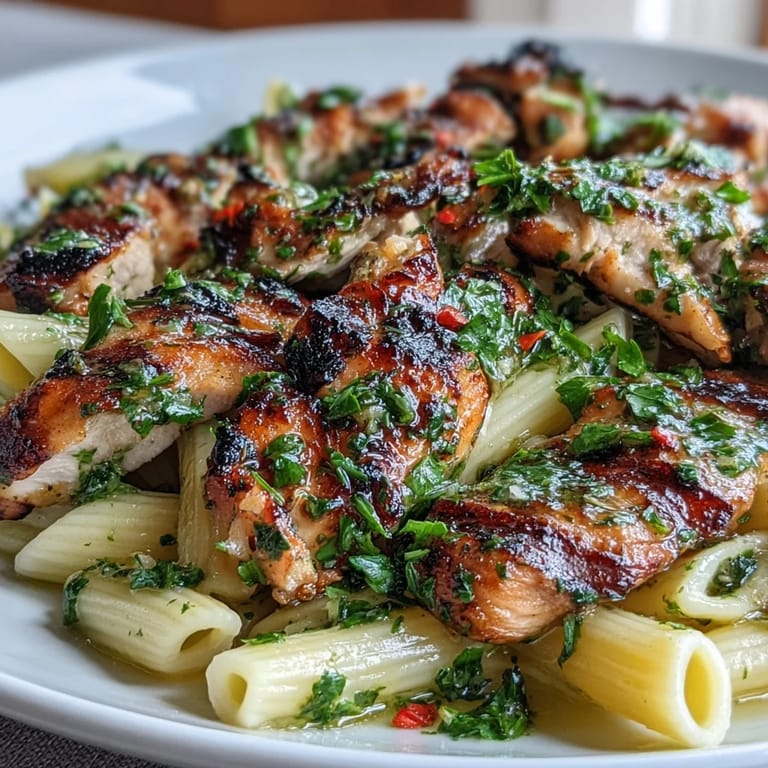
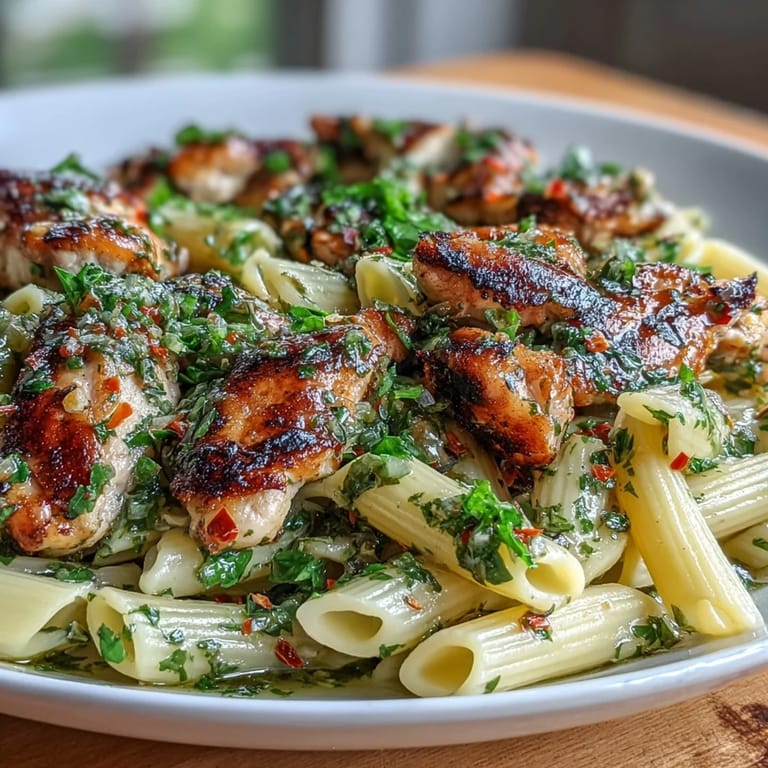
I made this for my sister's book club last spring, and the moment I plated it—that green sauce pooling around the golden pasta with charred chicken on top—the whole room went quiet. One of her friends asked for the recipe before even tasting it, which I took as a compliment. By the end of the night, someone was already planning to make it for their own dinner party.
Ingredients
- Fresh flat-leaf parsley (1 cup, finely chopped): This is the backbone of chimichurri—don't skimp or substitute dried here, because fresh parsley has a brightness that dried just can't touch.
- Fresh oregano (2 tablespoons or 2 teaspoons dried): If you have fresh, use it; dried works in a pinch but fresh herbs make the sauce sing differently.
- Garlic cloves (3, minced): Mince them as fine as you can manage—it distributes the garlic flavor evenly throughout the sauce instead of giving you random garlicky bites.
- Small shallot (1, finely chopped): Shallots add a subtle sweetness and complexity that regular onion misses.
- Crushed red pepper flakes (1/2 teaspoon): This gives the sauce its kick; you can adjust to your heat preference or leave it out entirely if spice isn't your thing.
- Extra virgin olive oil (1/2 cup): Quality matters here since it's a main flavor component—grab a bottle you actually enjoy tasting straight.
- Red wine vinegar (3 tablespoons): The acidity is what makes chimichurri work; it brightens everything and cuts through the richness of the chicken and pasta.
- Kosher salt and black pepper: Taste as you go; seasoning a sauce is always a judgment call based on your palate and the other ingredients.
- Boneless, skinless chicken breasts (2 large): Pound them to an even thickness if they're uneven, so they cook uniformly and don't dry out on the edges.
- Smoked paprika (1/2 teaspoon): This adds depth and a whisper of smoke that echoes beautifully with grilled chicken.
- Penne, rigatoni, or spaghetti (350 g): Choose whichever shape you love—I prefer penne because it catches the sauce in all those little tubes.
Tired of Takeout? 🥡
Get 10 meals you can make faster than delivery arrives. Seriously.
One email. No spam. Unsubscribe anytime.
Instructions
- Build your chimichurri foundation:
- Combine the parsley, oregano, garlic, shallot, and red pepper flakes in a medium bowl, then pour in the olive oil and red wine vinegar. Stir everything together gently so the herbs release their oils without getting bruised, then season with salt and pepper. Let it sit while you handle the chicken and pasta—the flavors will deepen and marry together beautifully.
- Season and grill the chicken:
- Pat your chicken breasts dry, then rub them lightly with olive oil and dust with smoked paprika, salt, and pepper on both sides. Heat your grill or grill pan to medium-high and cook the chicken for 6 to 7 minutes per side until it's golden with light char marks and cooked through (165°F at the thickest part).
- Cook pasta to that perfect al dente stage:
- Get a large pot of salted water boiling hard—the water should taste like the sea. Add your pasta and cook according to package directions, but start testing a minute or two before the suggested time so you catch it while it still has a little bite.
- Slice, combine, and finish:
- Let the grilled chicken rest for a few minutes, then slice it into bite-sized pieces. Drain your pasta (reserving a splash of that starchy cooking water), then toss everything together in a large bowl with most of the chimichurri sauce. If it feels a bit dry, add some reserved pasta water a tablespoon at a time until it reaches that glossy, saucy consistency you want.
- Plate and celebrate:
- Divide the pasta among bowls or plates, nestle some chicken on top, then drizzle with any remaining chimichurri and a shower of fresh parsley if you're feeling fancy. Serve with lemon wedges so people can adjust the brightness to their taste.
 Save
Save The real magic happened when my friend brought her kids over and watched them eat every bite of this without picking at their food—they actually asked for seconds. It made me realize that sometimes the thing that seems too grown-up or adventurous is exactly what people want; we just need someone brave enough to serve it.
The Story Behind the Sauce
Chimichurri is traditionally Argentinian, born from the simplicity of grill culture and fresh herbs. There's something deeply honest about a sauce made from things that grow in the ground and oil pressed from olives—no cream, no fuss, just honest flavors standing on their own. When paired with Italian pasta, it becomes something unexpected, a bridge between two cuisines that actually makes perfect sense once you taste it.
Why This Works as a Dinner Party Move
This dish looks elegant enough to impress but casual enough to feel approachable, which is exactly what you want when you're feeding people. The grilled chicken adds a restaurant-quality element without requiring any fancy techniques, and the vibrant green sauce is so visually striking that you don't need much else on the plate. Plus, since it's dairy-free, you're not worrying about anyone's dietary restrictions—everyone gets the full experience.
Making It Your Own
The beauty of this recipe is how forgiving it is; you can adjust the heat level, swap pasta shapes, or even use the same chimichurri sauce on grilled vegetables, fish, or tofu if you're feeding a mixed table. I've made versions with extra lemon zest stirred into the sauce, or added crispy breadcrumbs on top for texture, or even tossed in some cherry tomatoes in the summer when they're at their peak. The core idea is solid enough to handle your personal touches without falling apart.
- If you don't have fresh oregano, dried works just fine—just reduce it to the smaller amount since dried herbs are more concentrated.
- You can make the chimichurri sauce up to a day ahead and store it in the fridge, which is a perfect make-ahead move for entertaining.
- Leftovers actually taste even better the next day once all the flavors have had time to sit together and get cozy.
 Save
Save Make this when you want to feel like you've done something special without spending hours in the kitchen. It's the kind of dish that reminds you why cooking for people matters.
Recipe FAQ
- → What makes chimichurri sauce special?
Chimichurri is an Argentinian sauce made with fresh parsley, oregano, garlic, olive oil, and vinegar. It's bright, herbaceous, and adds incredible depth to grilled meats and pasta dishes.
- → Can I use dried herbs instead of fresh?
Fresh herbs work best for chimichurri's vibrant flavor. If using dried oregano, reduce the amount to 2 teaspoons, but fresh parsley is essential for that signature bright green color and fresh taste.
- → What pasta shapes work best?
Penne, rigatoni, or spaghetti all work beautifully. Tube-shaped pasta like penne catches the sauce in ridges, while spaghetti coats evenly in the vibrant chimichurri.
- → How long does chimichurri sauce last?
The sauce tastes best when freshly made, but it will keep refrigerated for up to a week. The flavors actually develop and meld better after sitting for a few hours.
- → Is this dish spicy?
The red pepper flakes add mild heat, but the dish isn't overly spicy. Adjust the amount to your preference, or omit them entirely for a milder version.
- → Can I make this ahead of time?
Prepare the chimichurri sauce up to a day ahead. Cook the pasta and chicken fresh, then toss everything together just before serving for the best texture and flavor.