 Save
Save My neighbor knocked on my door with a housewarming gift and a sheepish smile—she'd forgotten to grab a proper appetizer for the open house she was throwing that weekend. We spent an afternoon building a charcuterie board from scratch, and watching her face light up as we arranged the last handful of olives taught me that these boards aren't just food, they're invitations to slow down and connect. What started as a quick favor became a template I've used dozens of times since, each one slightly different depending on what's in the fridge and who's coming over.
I'll never forget my friend Sarah standing in my kitchen, phone in hand, frantically googling how to assemble a board because her in-laws were arriving in three hours. By the time they showed up, that board had sparked a 45-minute conversation about the origins of different cheeses and where everyone had traveled. Her mother-in-law asked for the recipe—which made us both laugh because there isn't really one, just confidence and good ingredients.
Ingredients
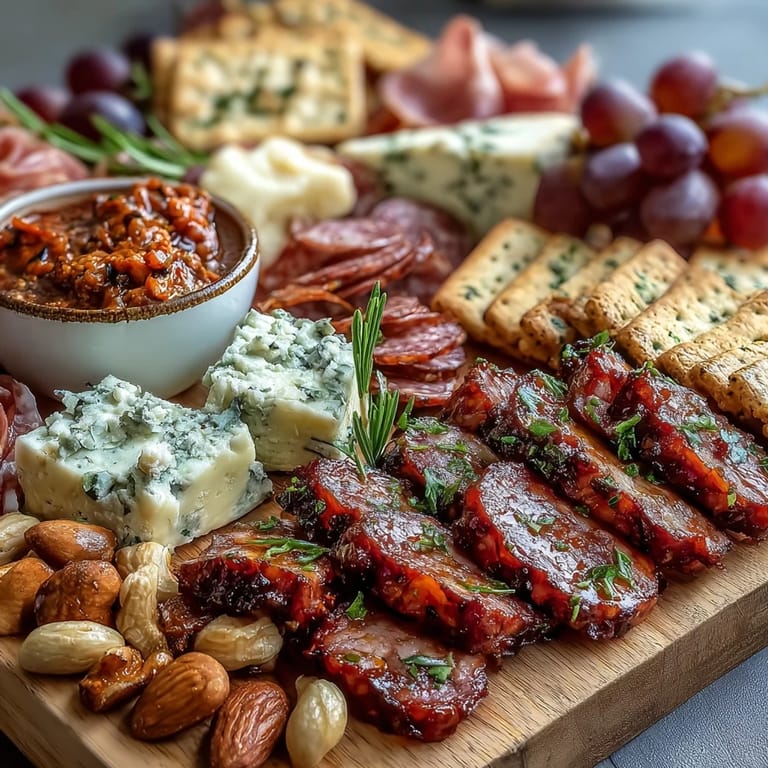
- Prosciutto, salami, smoked ham, and chorizo: These cured meats are your salty anchors, and buying them sliced saves you time; lay them loosely so they drape naturally rather than look cramped.
- Brie, aged cheddar, gouda, and blue cheese: The variety in texture and intensity keeps things interesting—soft, nutty, creamy, and bold all on one board means someone's palate always gets a happy surprise.
- Hummus, tzatziki, and roasted red pepper dip: Dips are the unsung heroes that make everything taste better and give people permission to eat more; small bowls prevent them from looking picked-over.
- Assorted crackers, baguette slices, and breadsticks: Mix textures and shapes so guests have options; water crackers are delicate, multigrain is hearty, breadsticks are fun to grab.
- Red and green grapes, cherry tomatoes, cucumber, bell pepper, and baby carrots: Fresh produce adds color, cleanliness, and crunch, balancing all the richness of cheese and meat.
- Mixed nuts, olives, dried apricots, and figs: These fill the gaps literally and figuratively, offering sweet-salty contrasts and textural variety that keeps people reaching back.
- Fresh rosemary and thyme: Scatter these sparingly as garnish; they look elegant and remind everyone this came from care, not a store.
Tired of Takeout? 🥡
Get 10 meals you can make faster than delivery arrives. Seriously.
One email. No spam. Unsubscribe anytime.
Instructions
- Start with the meats:
- Lay prosciutto, salami, ham, and chorizo in loose folds or rolled bundles across one section of your board, leaving breathing room so they don't look squashed. This anchors your design and gives your eye a place to land.
- Nestle the cheeses:
- Scatter brie slices, cheddar cubes, gouda slices, and blue cheese crumbles around the board with intention, spacing them so no one has to reach awkwardly to grab something. Think of it like constellation mapping—even distribution makes it feel abundant.
- Set out the dips:
- Spoon hummus, tzatziki, and roasted red pepper dip into small bowls and position them in gaps or corners where they'll catch the light. This prevents the dips from looking like afterthoughts and gives people obvious destinations.
- Arrange the crackers and bread:
- Fan out your crackers, baguette slices, and breadsticks in clusters, alternating types so the eye sees texture variation. Lean them at angles rather than laying them flat—it reads as more intentional and takes up more visual space.
- Fill with color:
- Distribute grapes, cherry tomatoes, cucumber slices, bell pepper strips, and baby carrots into the remaining gaps, letting colors talk to each other. The jewel tones against the pale cheeses make everything pop.
- Scatter the finishing touches:
- Distribute mixed nuts, olives, dried apricots, and figs in small clusters rather than spreading them thin, so people see abundance in every cluster they reach for. This is where you build little flavor combinations—nut with cheese, fig with cheddar, olive with meat.
- Garnish and serve:
- Tuck fresh rosemary sprigs and thyme leaves into corners and around the board's perimeter for color and fragrance. Bring it straight to the table while everything's fresh and watch people gravitate toward it immediately.
 Save
Save My partner once said watching me build a charcuterie board is like watching someone conduct an orchestra—each piece has a place, and the whole thing suddenly makes sense when it's finished. That comment stuck with me because it's true: these boards aren't complicated, but they matter in the way all things that bring people together matter.
The Secret to a Beautiful Board
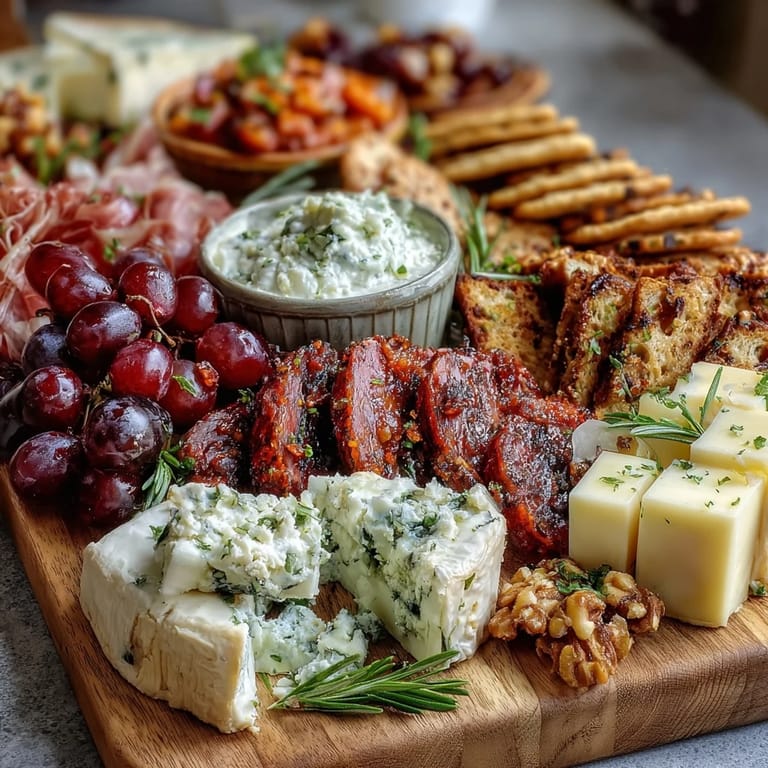
The magic isn't in expensive ingredients; it's in odd numbers, height variation, and color confidence. When I stopped treating my board like a symmetrical checkerboard and started thinking of it like a landscape—peaks and valleys, warm tones and cool ones, textures that surprise—everything changed. I've built boards with grocery store salami and secondary-market cheese that guests have raved about more than boards made with luxury ingredients arranged without thought.
Customizing for Your Crowd
The beauty of a charcuterie board is that it's a conversation with your guests, not a decree. If you know someone's vegetarian, load that side with more nuts, dried fruit, and creative vegetables; if someone loves spicy things, let them know which meats are bold and which dips have heat. I once made a board for a dinner party where half the guests were vegan, and instead of stressing, I just built an entire section without animal products—and it became the most talked-about part of the board.
Pairing and Presentation Tips
A crisp white wine like sauvignon blanc or pinot grigio cuts through the richness, while a light red like pinot noir doesn't overpower anything. If you're serving without alcohol, sparkling water with lemon or a light herbal iced tea keeps things refreshing without competing for attention.
- Make your board the centerpiece—it deserves a clear line of sight, not hidden on a side table competing for attention.
- Bring backup ingredients to the table in the fridge so you can refresh throughout the gathering without disappearing into the kitchen.
- Trust the gaps—a slightly underfull board reads as curated and intentional, while an overstuffed one looks chaotic even if the quality is excellent.
 Save
Save A charcuterie board is proof that feeding people doesn't have to be complicated to be meaningful. I hope yours becomes a centerpiece for conversations, laughter, and the kind of moments that make a house feel like home.
Recipe FAQ
- → What cured meats work well on this board?
Prosciutto, salami, smoked ham, and chorizo slices provide a variety of savory flavors and textures.
- → Which cheeses complement the meats?
Brie, aged cheddar, gouda, and blue cheese offer a balanced mix of creamy, sharp, and pungent profiles.
- → How can dips be best presented?
Serve dips like hummus, tzatziki, and roasted red pepper in small bowls spaced evenly around the board for easy access.
- → What fresh produce is ideal for this spread?
Grapes, cherry tomatoes, cucumber slices, bell peppers, and baby carrots add color, freshness, and crunch.
- → Are there suggestions for accommodating dietary preferences?
Swap meats or cheeses as needed, add gluten-free crackers, and consider vegetarian options to ensure inclusivity.
- → What garnishes enhance the board’s appearance?
Fresh herbs like rosemary and thyme add a fragrant and attractive finishing touch.