 Save
Save The first time I encountered pavlova was at a spring backyard gathering, when someone brought a cloud-like cake piled high with glistening berries. As soon as the meringue cracked under the spoon, releasing a sweet scent, I was hooked. The dessert felt both playful and sophisticated, a centerpiece that demanded attention and curiosity. It drew laughter from kids darting through the garden and prompted hushed questions about its origins. Over time, I found myself drawn to making pavlova whenever fresh berries were abundant and the weather hinted at celebration.
A few springs ago, I made this pavlova for my cousin's birthday. We crowded around the kitchen counter, quietly rooting for the meringue to survive our overzealous mixing, and the chatter grew as we piled berries on top. I remember my cousin dusting a little powdered sugar and declaring it her favorite birthday treat. Watching everyone's faces light up as they dug in was a reminder of how simple sweets can create spontaneous delight. Even the dog hovered hopefully by the table, intrigued by the berry aroma.
Ingredients
- Egg whites: Using room temperature egg whites helps them whip to lofty peaks, and I always crack them into a separate bowl to avoid any stray bits of yolk.
- Superfine sugar: This dissolves more completely than granulated, ensuring a silky smooth meringue shell.
- Cornstarch: Just a teaspoon, but trust—it leads to that pillowy, tender center instead of a dry crunch.
- White vinegar: The acid stabilizes the meringue and prevents deflation; I've learned never to skip this step.
- Vanilla extract: Adds gentle aroma beneath all that berry brightness.
- Heavy whipping cream: Cold cream whips quickest; sometimes I chill my bowl as well for extra insurance.
- Powdered sugar: Gives the whipped cream just a touch of sweetness for balance.
- Fresh berries: Choose ripe, vivid berries and dry them with a paper towel before topping so nothing sinks.
- Mint leaves: Optional, but they lend a pop of color and a whisper of freshness.
Tired of Takeout? 🥡
Get 10 meals you can make faster than delivery arrives. Seriously.
One email. No spam. Unsubscribe anytime.
Instructions
- Prepare for baking:
- Start by preheating your oven to 275°F and lining your baking sheet with parchment—drawing a circle keeps your meringue shape tidy. Flip the paper so the ink touches the pan, not the dessert.
- Whip the egg whites:
- In a spotless bowl, beat the egg whites on medium until soft peaks appear, and listen for their airy swoosh as they thicken.
- Add sugar gradually:
- Scatter in the sugar, a tablespoon at a time, and raise the speed; the mixture will transform into a glossy, billowy cloud.
- Fold in extras:
- With a gentle hand, fold in cornstarch, vinegar, and vanilla—just until blended for that soft center.
- Shape the pavlova:
- Scoop the meringue onto your parchment, smoothing it into a circle with swirled edges, making sure the sides are a bit higher to hold toppings later.
- Bake and cool:
- Slide it into the oven for 1 hour 15 minutes, then switch off the heat and let it cool inside with the door ajar; the shell will dry while the middle stays pillowy.
- Whip the cream:
- Use a chilled bowl and beat cream, powdered sugar, and vanilla until soft peaks form; the thrum of the mixer is your cue it's ready.
- Assemble:
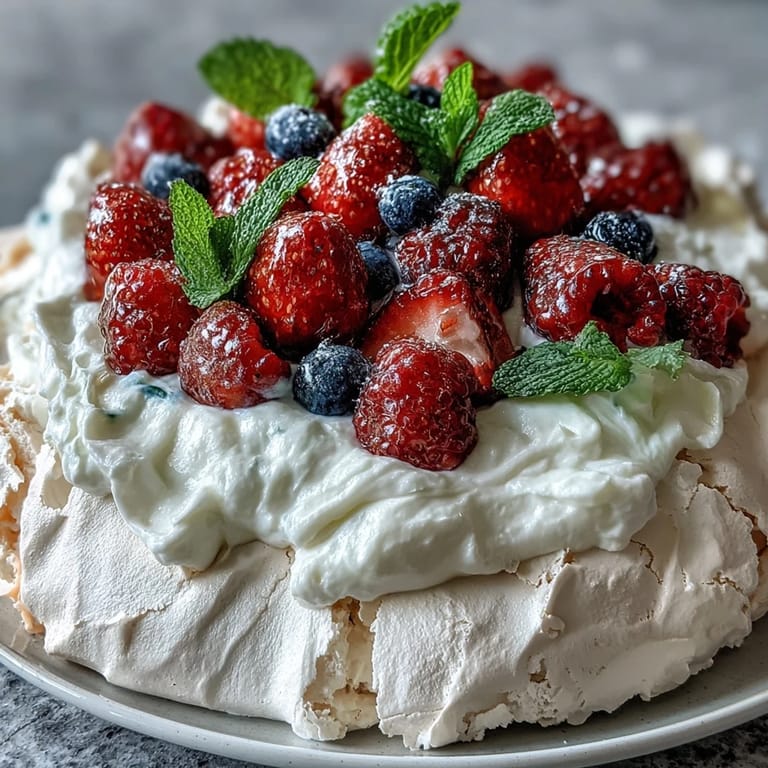
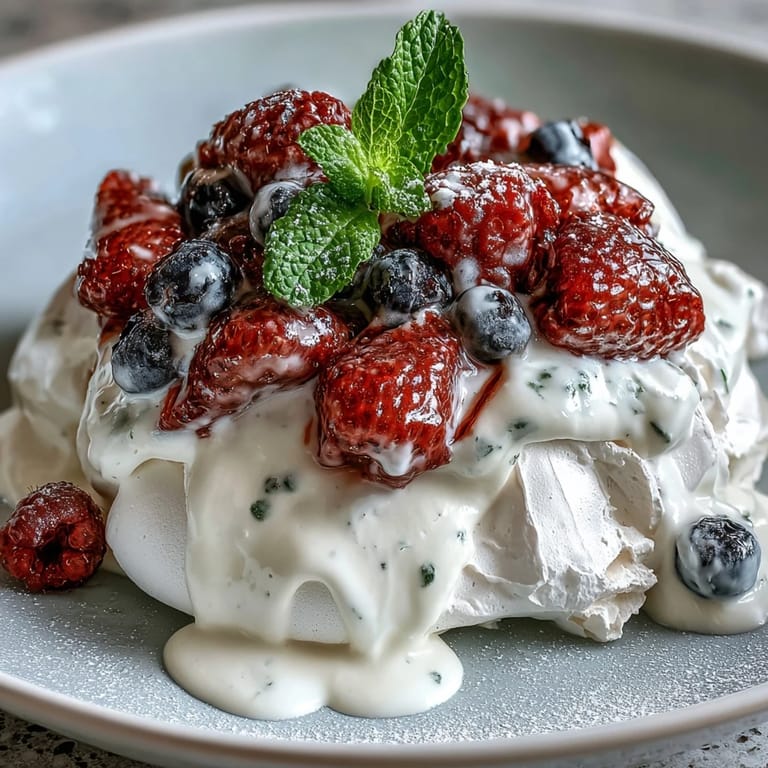
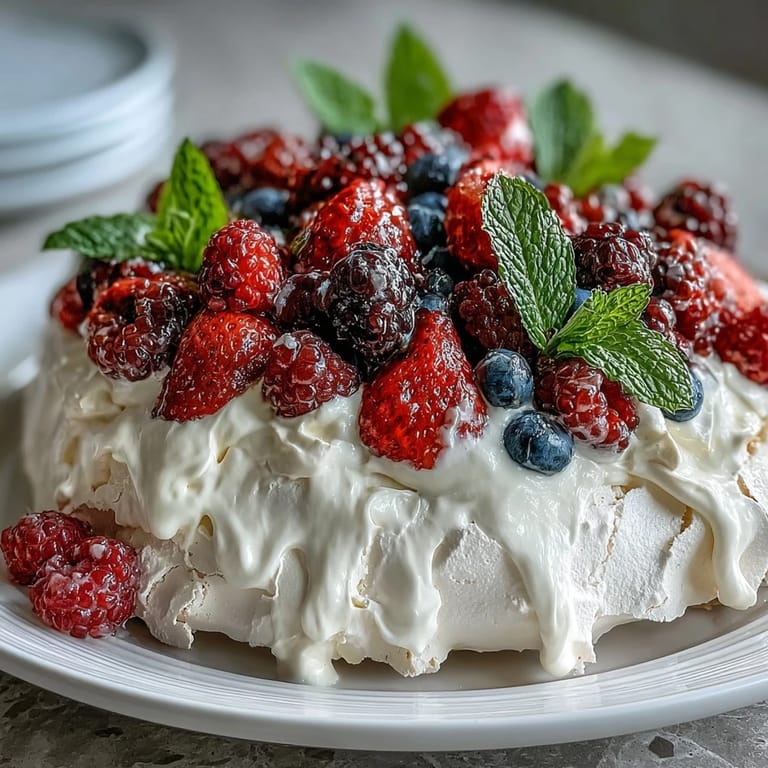
- Carefully transfer the cooled meringue to a platter, spoon on whipped cream, then scatter berries in a generous mound.
- Garnish and serve:
- Dot with mint if you like, and serve immediately—everyone should taste the contrast of cool cream and crisp shell.
 Save
Save The moment I realized how much this pavlova meant to our family was when my little niece asked for seconds, calling it 'magic cake.' Sharing slices under the dappled light, we laughed about the mess of cream and berries on our plates, forgetting the formality and just savoring the fun. It turned dessert into an event, not just a sweet ending.
How To Avoid Sticky Meringue
If the air feels humid, I set my oven on low for a few minutes to dry out the kitchen beforehand. Even a slightly sticky pavlova tastes lovely, but you'll miss that satisfying crack if the shell doesn't dry fully. Running a fan or baking late at night sometimes helps, especially in summer.
Berry Selection Makes the Difference
Every time I make this, I try different berry combinations—sometimes tart raspberries, sometimes sweet strawberries. The most important thing is to dry your berries well, because any excess juice will seep into the meringue and make it soggy. Mixing in a few fresh mint leaves adds a cool note without overpowering the fruit.
Last-Minute Prep for Serving Success
Just before serving, I double-check that the meringue is cool and the whipped cream gently spread across the top. It helps to slice with a serrated knife and wipe between cuts for clean pieces. Ask guests to wait until everything is assembled so the pavlova keeps its crunch.
- Make the cream and chop berries ahead but assemble only at the last minute.
- If cracks appear, just cover them with berries; no one will notice.
- Leftovers should be eaten the same day, or the texture fades.
 Save
Save This pavlova is equal parts performance and pleasure, best shared with a crowd. There's something joyful about breaking through the crispy shell for that first taste, surrounded by laughter and berry-stained fingers.
Recipe FAQ
- → How do I ensure the meringue stays crisp?
Bake the meringue on a dry day, avoid humidity, and let it cool slowly in the oven with the door ajar.
- → Can I use different fruits for topping?
Yes, swap berries for seasonal fruits like kiwi or peaches to match available produce.
- → How do I achieve stiff peaks when whipping egg whites?
Use clean, dry bowls, and beat the whites, adding sugar gradually until glossy and peaks stand firm.
- → Is this dessert suitable for gluten-free diets?
The pavlova contains no gluten-containing ingredients, making it ideal for gluten-free diets.
- → What tools are needed for preparation?
You'll need an electric mixer, mixing bowls, spatula, baking sheet, and parchment paper for easy meringue shaping.
- → What pairs well with pavlova?
Moscato d'Asti or Champagne complement pavlova's sweetness and enhance its festive appeal.