 Save
Save My neighbor brought over a jar of homemade sauerkraut one autumn morning, and I had no idea what to do with it beyond the obvious hot dog topping. She suggested tossing it into a slaw with fresh vegetables and a simple vinaigrette, and something clicked—suddenly I understood why fermented cabbage wasn't just a condiment but a gateway to brighter, tangier sides. That first bite changed how I thought about leftovers and quick weeknight meals.
I served this at a casual dinner party where someone was avoiding heavy foods, and watching their face light up when they tasted it reminded me that simple food done well hits different than anything complicated. They asked for the recipe before dessert was even served, which felt like the highest compliment possible.
Ingredients
- Sauerkraut, drained and lightly squeezed (1 ½ cups): The star ingredient that brings funk and health—squeezing gently removes excess brine so the slaw stays crisp rather than swimming in liquid.
- Green cabbage, finely shredded (1 cup): Adds body and sweetness that balances the sauerkraut's punch without overwhelming it.
- Carrot, grated (1 medium): Brings natural sweetness and a subtle earthiness that makes you taste all the layers.
- Red bell pepper, thinly sliced (½): The pop of color and mild sweetness that keeps this from tasting austere.
- Green onions, thinly sliced (2): A whisper of sharpness that wakes up the entire dish if you slice them just before mixing.
- Fresh parsley, chopped (2 tablespoons): Brightens everything and adds a fresh herbaceous note that ties flavors together.
- Extra-virgin olive oil (2 tablespoons): Use good oil here since it's the foundation of the dressing and its flavor carries through.
- Apple cider vinegar (1 tablespoon): Works with the sauerkraut's acidity rather than competing with it, creating a rounded tang.
- Dijon mustard (1 teaspoon): The secret keeper that amplifies flavor without making anything taste mustardy.
- Maple syrup or honey (½ teaspoon): Just enough sweetness to soften the fermented edges and make the dressing feel complete.
- Ground black pepper and salt, to taste: Essential for bringing out what's already there and adjusting to your preference.
Tired of Takeout? 🥡
Get 10 meals you can make faster than delivery arrives. Seriously.
One email. No spam. Unsubscribe anytime.
Instructions
- Gather and prepare:
- Drain your sauerkraut through a fine mesh sieve and give it a gentle squeeze with your hands to remove excess liquid—you want it moist but not waterlogged. Have all vegetables prepped and ready, which only takes a few minutes with a sharp knife or mandoline.
- Build the base:
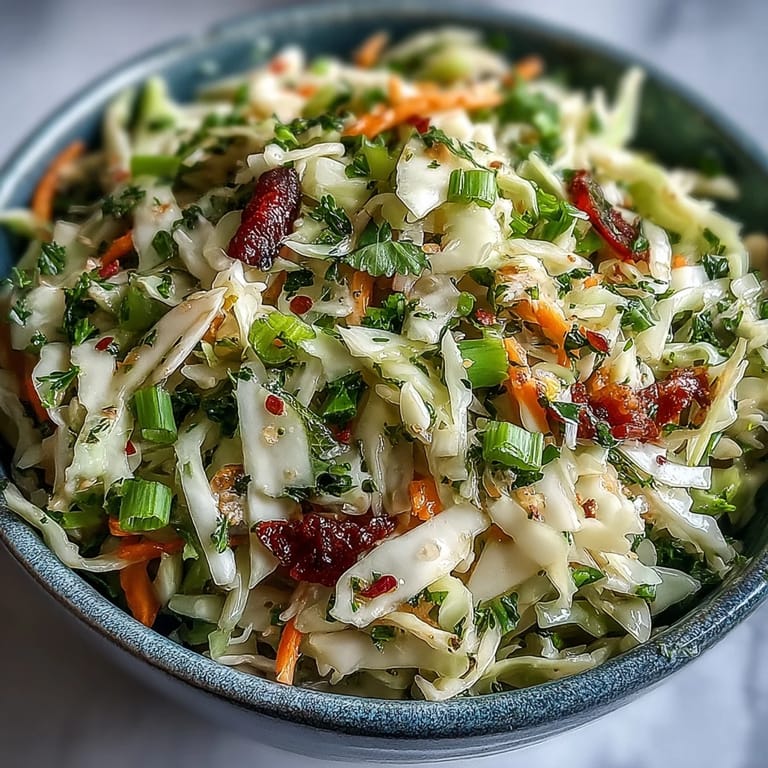
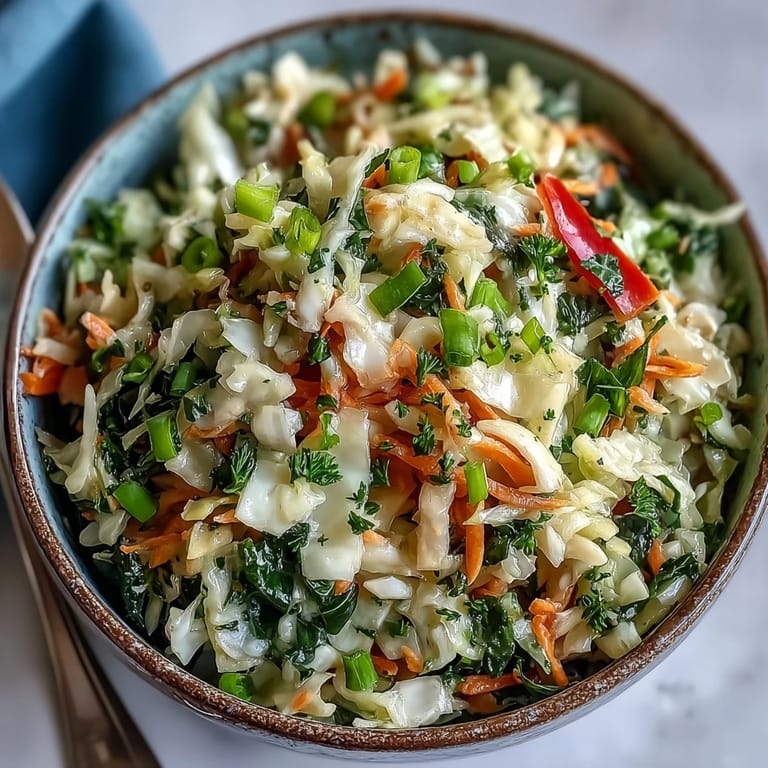
- Toss the drained sauerkraut, shredded green cabbage, grated carrot, sliced bell pepper, green onions, and fresh parsley into a large bowl. The mix should look colorful and alive, almost like confetti made of vegetables.
- Whisk the dressing:
- In a separate small bowl, whisk together the olive oil, apple cider vinegar, Dijon mustard, maple syrup, black pepper, and a pinch of salt until it's smooth and emulsified. Taste it straight from the whisk—it should taste balanced, with the mustard playing support rather than taking center stage.
- Combine and coat:
- Pour the dressing over the vegetable mixture and toss everything together using your hands or two large spoons until every piece is glistening and coated. You'll notice the sauerkraut releases a tiny bit more liquid, which is normal and actually helps distribute the dressing.
- Let it rest and serve:
- Set the slaw aside for 10 minutes—this lets the flavors meld and soften any raw edges. Taste and adjust seasoning with more salt or pepper, then serve it chilled or at room temperature depending on what you're pairing it with.
 Save
Save My partner used to push sauerkraut around the plate like it was a vegetable punishment until they actually tasted this version. Now it's their requested side dish for grilled fish, and I love that something so simple shifted their entire perspective on fermented foods.
Why Sauerkraut Belongs in Your Regular Rotation
Fermented foods have this quiet magic—they improve your digestion without you having to think about it or taste something medicinal. Once you start eating sauerkraut regularly, you notice you feel lighter and more settled, which might sound small until you realize it's actually everything. The fact that it tastes genuinely delicious is almost a bonus at that point.
Making It Your Own
This recipe is honestly a framework rather than a prescription, and that's where the fun begins. I've added crispy radishes for extra bite, scattered toasted sunflower seeds for texture, and even mixed in a handful of thinly sliced fennel when I wanted something more aromatic. The sauerkraut and dressing stay constant, but everything else can shift based on what's in your crisper drawer or what mood you're in.
Serving Ideas and Pairings
This slaw is endlessly flexible—it works as a crisp side for grilled sausages or fish, piled onto sandwiches for an unexpected crunch, or even as a fresh topping for roasted vegetables. I've served it alongside barbecue, tacos, and simple grain bowls, and it somehow makes every meal feel more intentional and complete.
- Spoon it onto the side of a grilled fish fillet for brightness and probiotic benefits in one bite.
- Use it as a sandwich topper instead of regular coleslaw for a tangy, probiotic upgrade.
- Pair with grilled sausages or charcuterie for a classic German-inspired meal that feels effortless.
 Save
Save This is the kind of dish that proves you don't need complicated techniques or long ingredient lists to create something memorable. It's become my go-to when I want to add something bright and nourishing to a meal, and I hope it becomes yours too.
Recipe FAQ
- → How long should sauerkraut slaw sit before serving?
Let the slaw rest for 10 minutes after tossing with the dressing. This brief resting period allows the vinaigrette to penetrate the vegetables and helps the flavors meld together beautifully. The slaw can be served chilled or at room temperature.
- → Can I make this sauerkraut slaw ahead of time?
Yes, you can prepare this slaw up to 24 hours in advance. Store it in an airtight container in the refrigerator. The vegetables will soften slightly over time, but the fermented cabbage provides enough structure to maintain a pleasant texture even the next day.
- → What vegetables can I add for extra crunch?
Thinly sliced radishes, fennel, or jicama work wonderfully for additional crispness. Toasted sunflower seeds or pumpkin seeds also provide a satisfying nutty crunch while adding healthy fats and protein to the dish.
- → Is sauerkraut slaw good for gut health?
Absolutely. Sauerkraut contains naturally occurring probiotics from the fermentation process, which support digestive health and contribute to a healthy gut microbiome. Using unpasteurized sauerkraut ensures maximum probiotic benefits.
- → What pairs well with sauerkraut slaw?
This slaw complements grilled sausages, bratwurst, or fish perfectly. It also works as a tangy topping for sandwiches and burgers. The acidity cuts through rich meats while the crunch provides textural contrast to soft dishes.
- → Can I substitute maple syrup with honey?
Yes, maple syrup can be replaced with honey in equal amounts. Both provide subtle sweetness that balances the tangy sauerkraut and vinegar. Note that honey makes the dish unsuitable for strict vegans, while maple syrup keeps it plant-based.