 Save
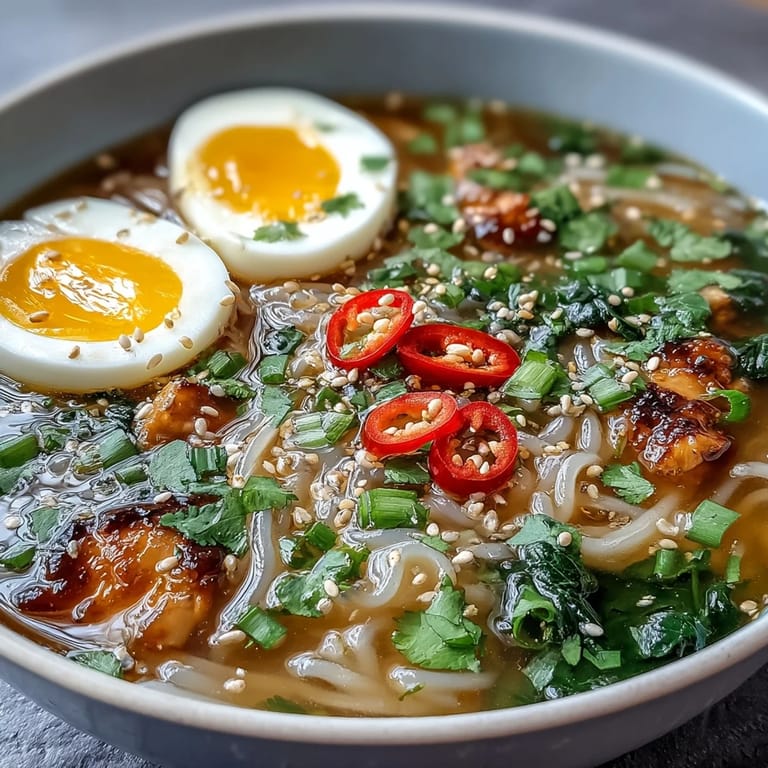
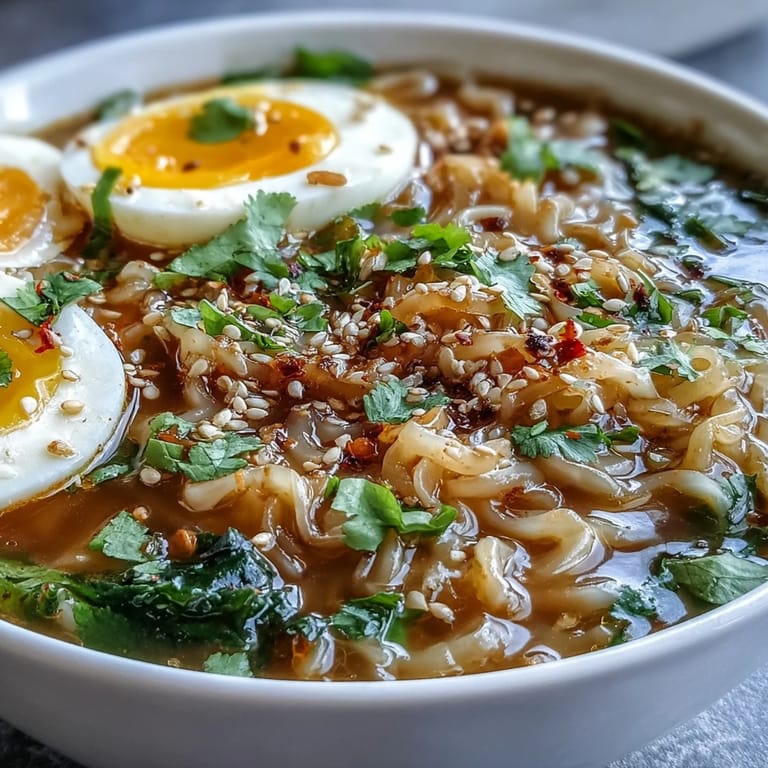
Save There's something about a steaming bowl of shirataki noodles in bone broth that feels like a reset button for my kitchen. I discovered this combination on a particularly gray afternoon when I was hunting for something satisfying that wouldn't derail my low-carb goals, and honestly, the first sip of that ginger-infused broth made me wonder why I hadn't thought of it sooner. The noodles themselves are almost invisible until you taste them, slipping through the broth with this delicate, almost bouncy texture that shouldn't work but somehow does. What started as an experiment became my go-to bowl whenever I need comfort without the heaviness.
I made this for a friend who'd just started questioning carbs, and watching them taste the broth for the first time was genuinely moving. They expected something clinical or diet-ish, and instead got this warm, deeply savory experience with soft egg yolk running into the noodles. That's when I realized this isn't a workaround meal—it's actually just a really good bowl of food that happens to fit certain parameters.
Ingredients
- Bone broth (4 cups): This is your foundation, so quality matters more than quantity—a rich, naturally gelatinous broth will make the entire bowl feel luxurious without any cream or heavy additions.
- Fresh ginger (1 thumb-sized piece, sliced): Slicing rather than mincing keeps the pieces easy to remove and prevents the broth from becoming too spicy or overwhelming.
- Garlic (2 cloves, smashed): Smashing rather than chopping releases the oils more gently, giving you that mellow garlic warmth instead of sharp bite.
- Soy sauce or tamari (2 tablespoons): Tamari is your friend if you're gluten-free, and honestly, the umami it adds is non-negotiable for this dish.
- Rice vinegar (1 tablespoon): This subtle acid brightens everything and prevents the bowl from feeling one-note or heavy.
- Sesame oil (1 teaspoon): A little goes a long way here—too much and it overwhelms, but the right amount adds an almost toasted richness.
- Shirataki noodles (400 g): These need thorough rinsing because they come packed in a fishy liquid, and many people skip this step and regret it immediately.
- Soft-boiled eggs (2, halved): The runny yolk becomes a sauce of sorts, so don't overcook them or you lose that magic.
- Spring onion, red chili, fresh herbs, sesame seeds: These toppings are optional but genuinely transform the bowl from simple to special.
Tired of Takeout? 🥡
Get 10 meals you can make faster than delivery arrives. Seriously.
One email. No spam. Unsubscribe anytime.
Instructions
- Build your flavor base:
- Combine the bone broth, ginger slices, smashed garlic, soy sauce, rice vinegar, and sesame oil in a medium pot, then bring it to a gentle boil over medium heat. You want to see little bubbles breaking the surface, not a rolling boil that will cause everything to become cloudy.
- Let it infuse:
- Reduce the heat and let everything simmer for 10 minutes—this isn't a rush step, and you'll notice the broth shifting from basic to deeply aromatic as the ginger and garlic release their essence. Set a timer so you don't forget about it.
- Prepare the noodles:
- While the broth is simmering, drain your shirataki noodles and rinse them thoroughly under cold water—I mean really rinse them, holding the package under the tap and letting the water run through for at least 30 seconds. Place them in a sieve, pour boiling water over them once more to remove any remaining odor, then set them aside.
- Bring everything together:
- Pour those prepped noodles into the simmering broth and let them heat through for 2 to 3 minutes—they're already cooked, so you're just warming them and letting them absorb some of that flavor. Remove the ginger and garlic slices (they've done their job) and divide everything between two bowls.
- Top and serve:
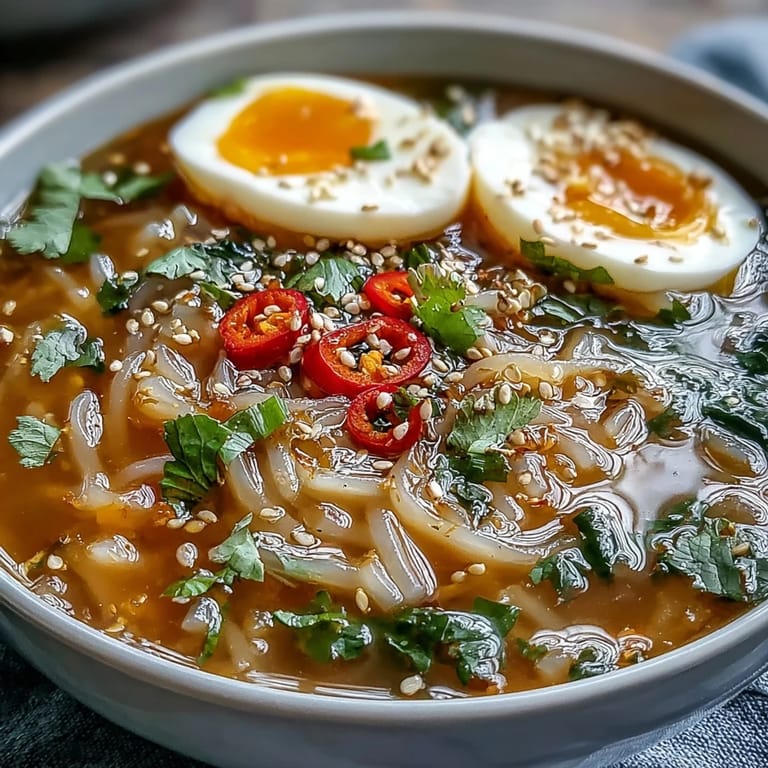
- Arrange your soft-boiled egg halves, sliced spring onion, fresh chili, herbs, and sesame seeds on top of each bowl. The heat from the broth will warm the toppings slightly, releasing their aromatics.
 Save
Save I've learned that this bowl works best when you're not rushing, when you can actually sit with it and notice the layers of flavor developing on your tongue. There's something meditative about how the heat gradually warms the toppings and the broth softens the chill slightly off the herbs, making each spoonful feel intentional rather than hurried.
Why Bone Broth Is Your Secret Weapon
Bone broth carries a kind of inherent warmth and depth that regular stock simply can't replicate, and in a dish this minimal, that richness becomes the entire experience. I used to think I needed cream or butter or complex layering to feel satisfied, but then I started using really good broth and realized I'd been overcomplicating things. The collagen and gelatin in bone broth create this silky mouthfeel that makes the noodles feel substantial even though they're technically just water and fiber.
Making This Bowl Your Own
The beauty of this recipe is that it's structured enough to feel complete but flexible enough to become something different based on what you have or what you're craving. I've made it with leftover shredded chicken when I wanted extra protein, with a poached egg instead of soft-boiled, with thicker slices of jalapeño when I wanted more heat. The broth carries whatever you add to it, so don't feel locked into the original version.
Storage and Timing Tips
The broth itself keeps beautifully in the refrigerator for up to four days, which means you can make a big batch and assemble bowls throughout the week without much fuss. The noodles should be prepared fresh each time (they don't store well once cooked), but having the broth ready cuts your actual cooking time down to maybe five minutes.
- If you're planning ahead, make your broth the night before and let the flavors deepen even more as it sits.
- Soft-boil your eggs in the morning if you're eating this for lunch, and store them in the fridge until you're ready to reheat the broth.
- Keep your toppings prepped in separate containers so assembly feels like second nature, not another chore.
 Save
Save This bowl has become my blueprint for how I want to eat: simple, intentional, and satisfying without feeling like I'm settling for less. Every time I make it, I'm reminded that comfort food doesn't require complicated technique or a long list of ingredients.
Recipe FAQ
- → What do shirataki noodles taste like?
Shirataki noodles have a very mild, neutral flavor on their own. They absorb the taste of whatever broth or sauce they're cooked in, making them perfect for this aromatic bone broth preparation. The texture is slightly chewy and springy, similar to glass noodles.
- → Do I need to cook the noodles before adding them to broth?
Shirataki noodles come pre-cooked and just need thorough rinsing under cold water and a quick blanch with boiling water to remove any natural odor. They only need 2-3 minutes in the simmering broth to heat through and absorb flavors.
- → Can I make this vegetarian or vegan?
Absolutely. Substitute the bone broth with a rich vegetable broth and omit the soft-boiled eggs. You can add tofu, mushrooms, or seaweed for extra protein and umami flavor while keeping the dish completely plant-based.
- → How long does the broth stay fresh?
The assembled dish is best enjoyed immediately while the noodles retain their texture. However, you can store the broth and noodles separately in airtight containers in the refrigerator for up to 3 days. Reheat the broth gently and add the noodles just before serving.
- → What protein additions work well?
Shredded cooked chicken, pork, or beef are excellent additions. For plant-based options, try cubed tofu, edamame, or tempeh. The noodles themselves provide minimal protein, so adding these ingredients transforms this light dish into a more substantial meal.
- → Can I freeze the broth?
Yes, the prepared broth freezes beautifully for up to 3 months. Freeze it without the noodles, as shirataki can become mushy when frozen and thawed. Simply thaw the broth overnight in the refrigerator, reheat, and add fresh rinsed noodles when ready to serve.