 Save
Save My kitchen was filled with the smell of roasted squash on a chilly October afternoon when my neighbor stopped by with a basket of acorn squashes from her garden. She mentioned casually that she never knew what to do with them, and I found myself rummaging through my pantry, pulling out cream and nutmeg almost on instinct. What started as a quick experiment turned into this silky, golden soup that somehow tasted like autumn itself, and now I make it whenever I need something that feels both elegant and completely unpretentious.
I served this soup at a small dinner party last winter when a guest mentioned she'd been feeling under the weather, and watching her take that first spoonful and actually smile—like the warmth was healing something—reminded me why I love cooking for people. It wasn't fancy or complicated, just genuinely comforting in a way that felt like something her grandmother might have made.
Ingredients
- Acorn squash (2 medium, about 2 lbs total): Roasting brings out the natural sweetness and makes scooping the flesh so much easier than trying to peel them raw—trust me on this one.
- Yellow onion (1 medium, chopped): The base of flavor that mellows out as it cooks and adds body to the soup without any sharp edges.
- Garlic (2 cloves, minced): Just enough to give depth without overwhelming the delicate squash flavor.
- Carrot (1 medium, peeled and chopped): Adds a subtle earthiness and helps balance the sweetness of the squash.
- Vegetable broth (4 cups): Use a good quality broth you actually like the taste of, since it's the foundation of everything.
- Water (1 cup): Keeps the soup from becoming too heavy or one-dimensional in flavor.
- Heavy cream or coconut milk (1/2 cup): The finish that makes it feel luxurious—use whichever works for your diet, they both work beautifully.
- Olive oil (2 tbsp): Split between roasting the squash and sautéing the aromatics for different flavor layers.
- Salt and black pepper: Season as you taste, not all at once at the beginning.
- Ground nutmeg and cinnamon (1/4 tsp each): The secret ingredients that make people pause and ask what that warm spice is.
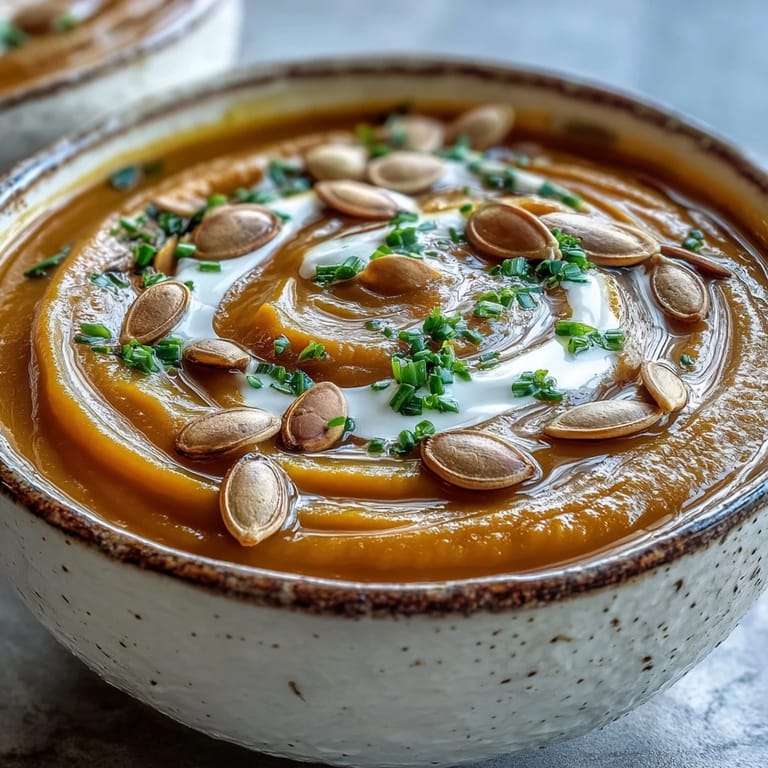
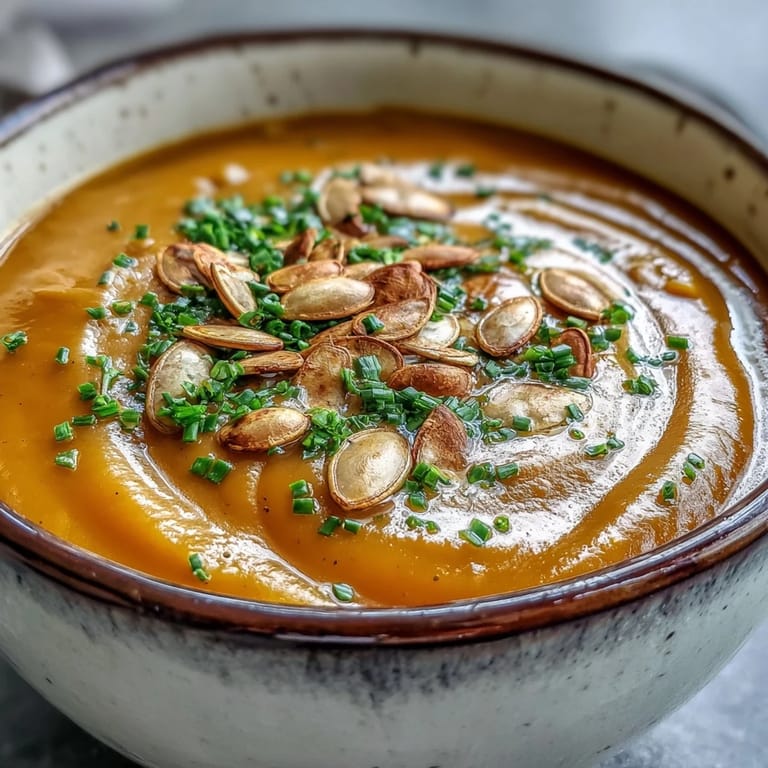
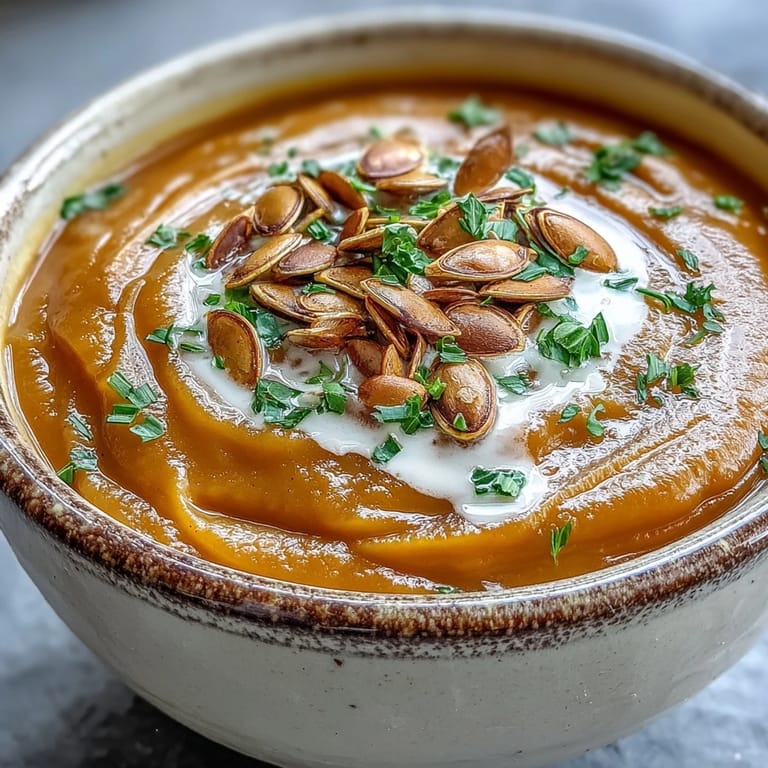
- Toasted pumpkin seeds, fresh chives, and cream drizzle (optional garnish): These aren't just pretty—they add texture and brightness that makes the soup feel complete.
Tired of Takeout? 🥡
Get 10 meals you can make faster than delivery arrives. Seriously.
One email. No spam. Unsubscribe anytime.
Instructions
- Get your squash ready for roasting:
- Preheat your oven to 400°F and line a baking sheet with parchment paper. Brush the cut sides of your halved and seeded acorn squash with about 1 tablespoon of olive oil, then place them cut-side down on the sheet.
- Roast until golden and tender:
- Let them roast for 30 to 35 minutes until the flesh is soft enough to scoop easily. Once they're cool enough to handle, just scrape the flesh away from the skin with a spoon and discard the skins.
- Build your flavor base:
- In a large pot, heat the remaining tablespoon of olive oil over medium heat. Add your chopped onion, carrot, and minced garlic, then let them soften for 5 to 7 minutes, stirring occasionally so they get tender without browning.
- Combine everything for the blend:
- Add the roasted squash flesh, your vegetable broth, water, salt, pepper, nutmeg, and cinnamon to the pot. Bring it to a boil, then lower the heat and let it simmer gently for 10 minutes so the flavors really get to know each other.
- Puree into silky smoothness:
- Take the pot off the heat and use an immersion blender to work through the soup until it's completely smooth and velvety. If you don't have an immersion blender, carefully transfer the soup in batches to a countertop blender—just be careful with hot liquid.
- Finish with cream and taste:
- Stir in your cream or coconut milk and taste as you go, adjusting the salt and spices to your preference. If it cooled down during blending, reheat gently over medium-low heat without letting it boil.
- Serve with intention:
- Ladle the soup into bowls and scatter those toasted pumpkin seeds and fresh chives on top, maybe with a small drizzle of cream if you want to be fancy about it.
 Save
Save There's something about ladling a warm bowl of this soup that makes even a regular Tuesday afternoon feel like a small celebration. It reminds me that sometimes the best meals are the ones that ask very little of you but give so much comfort in return.
Why Roasting Makes All the Difference
I learned the hard way that you can't just boil acorn squash and expect magic—roasting it caramelizes the natural sugars and deepens the flavor in a way that raw or steamed squash never could. The whole kitchen fills with this incredible nutty aroma, and when you scoop the tender flesh off the skin, it's almost creamy before you even add any cream.
Customizing Without Losing the Soul
The beauty of this soup is that it's forgiving enough to adapt to what you have on hand or what you're in the mood for. I've made it with butternut squash when acorn wasn't available, and it was just as lovely—slightly sweeter, slightly different texture, but equally satisfying.
Serving Ideas and Storage
This soup keeps beautifully in the fridge for up to four days and actually tastes even better the next day when the flavors have settled into one another. You can freeze it too, though I recommend freezing it before adding the cream, then stirring that in fresh when you reheat—it keeps the texture from getting weird.
- Pair it with crusty bread, a simple salad, or serve it as an elegant first course before something lighter like roasted fish.
- If you're making it for guests, you can prep everything the day before and just roast the squash and finish the soup an hour before they arrive.
- A small pinch of cayenne or even a grind of fresh black pepper on top adds sophistication if you want to elevate it beyond comfort food.
 Save
Save This soup has become my go-to when I want to feel like I've really cooked something special without any of the stress. Make it once and you'll understand why roasted squash and warm spices belong together.
Recipe FAQ
- → Can I make this soup vegan?
Yes, simply substitute coconut milk for the heavy cream to create a completely dairy-free and vegan version while maintaining the soup's creamy texture.
- → What can I substitute for acorn squash?
Butternut squash works excellently as a substitute for acorn squash, offering a similar sweetness and texture when roasted and blended.
- → How do I achieve the smoothest texture?
Use an immersion blender directly in the pot for convenience, or transfer to a countertop blender in batches for the silkiest, most velvety consistency.
- → Can I prepare this soup in advance?
Absolutely. This soup stores well in the refrigerator for up to 4 days and actually develops deeper flavors overnight. Reheat gently on the stovetop before serving.
- → What garnishes work best with this soup?
Toasted pumpkin seeds add delightful crunch, while fresh chopped chives provide color and brightness. A drizzle of cream creates an elegant presentation.
- → How can I add more depth to the flavor?
Add a pinch of cayenne pepper for subtle heat, or try roasting the garlic alongside the squash for a deeper, sweeter flavor profile.