 Save
Save There's something about a pot of minestrone that stops time in my kitchen. My neighbor Marco once brought over a thermos of his nonna's version on a rainy Tuesday, and I watched steam rise from the bowl while he told stories about growing up in Liguria. That soup tasted like patience and seasons all mixed together, and I've been chasing that feeling ever since. What I love most is how it changes with what's in my vegetable drawer—summer zucchini, winter squash, whatever needs rescuing from the back shelf. It's the kind of dish that teaches you to listen to your ingredients instead of fighting them.
I made this for my book club last October when someone brought up how the season had shifted overnight. We all looked at each other's summer salads and realized nobody wanted light food anymore. So I threw together a pot of minestrone with butternut squash and kale, and watching everyone go quiet mid-sentence to eat was worth more than any discussion we'd planned.
Ingredients
- Olive oil: Use the good stuff here because it's one of just a few ingredients, and you'll actually taste it in every spoonful.
- Onion, carrots, and celery: This is your flavor foundation, and taking 5 minutes to let them soften properly changes everything about what comes next.
- Garlic: Mince it fine so it disappears into the background instead of lurking in chunks.
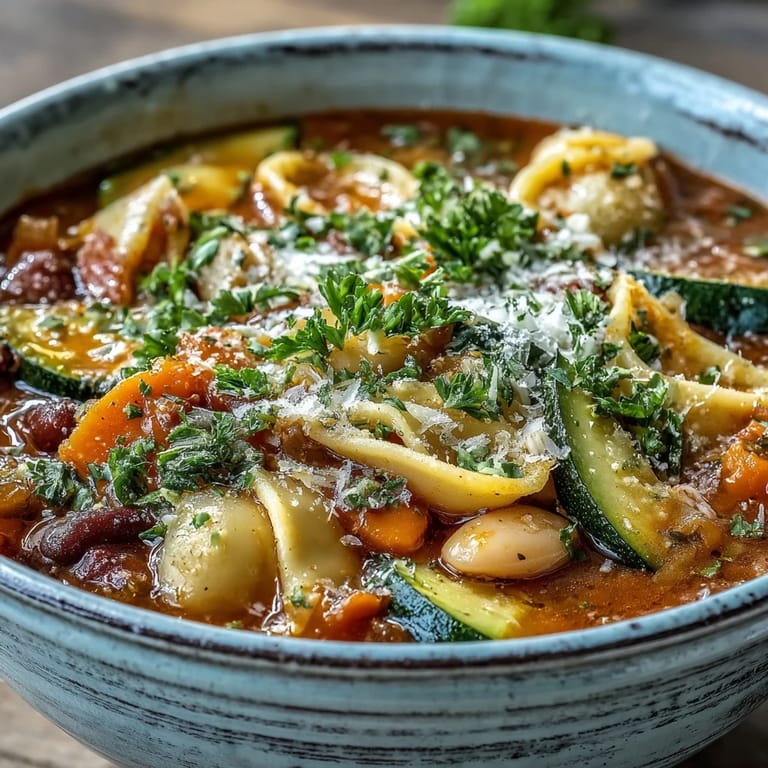
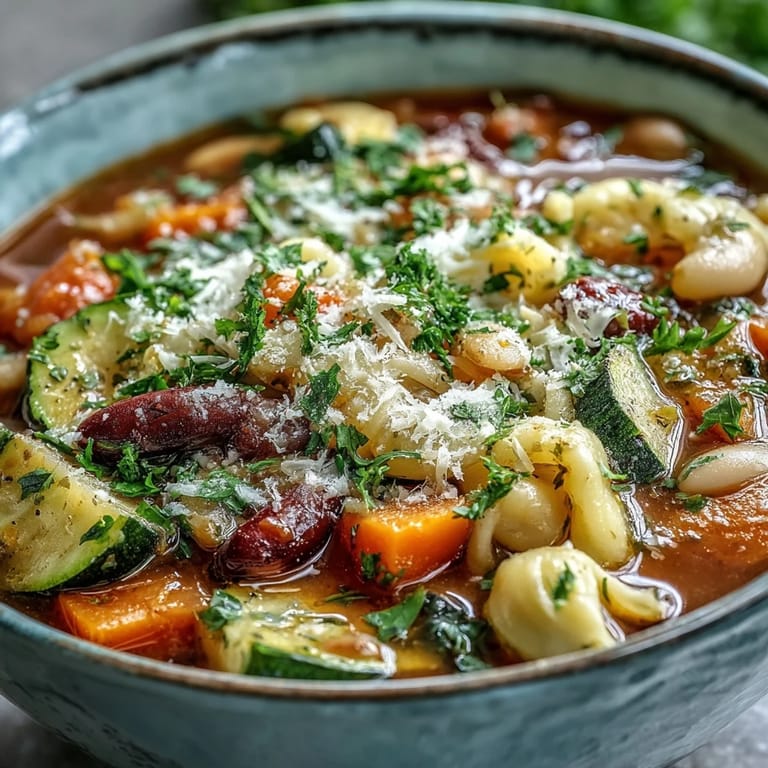
- Zucchini or butternut squash: Summer or winter versions both work beautifully; the soup knows how to adapt to what the season offers.
- Green beans, kale, or spinach: Pick whichever feels fresh and feels right for the time of year you're cooking.
- Diced tomatoes: Canned is honest here; there's no shame in it, and the tomatoes have already done the work of concentrating their flavor.
- Vegetable broth: This is where depth lives, so use broth you'd actually drink, not the sad stuff that tastes like sadness in a carton.
- Cannellini or borlotti beans: They soften further as they simmer, becoming almost creamy without any cream at all.
- Small pasta: Ditalini and elbow shapes hold broth better than long thin strands, which matters more than you'd think.
- Bay leaf, oregano, and basil: Dried herbs work perfectly here because they have time to open up and release their personality.
- Fresh parsley: Add it at the very end so it stays bright green and doesn't fade into the background like everything else.
- Parmesan cheese: Optional but transformative if you're not going vegan; a small handful stirred in and more at the table makes people sit up straighter.
Tired of Takeout? 🥡
Get 10 meals you can make faster than delivery arrives. Seriously.
One email. No spam. Unsubscribe anytime.
Instructions
- Start with the base:
- Heat your olive oil until it shimmers, then add the onion, carrots, and celery. Let them soften for a full 5 minutes, stirring occasionally, until they lose their hard edges and the kitchen starts to smell like cooking.
- Build the layers:
- Add minced garlic and your chosen summer or winter vegetables, cooking for 3 minutes until the garlic stops smelling raw and sharp. You'll know it's ready when you take a deep breath and it smells like dinner is actually happening.
- Add the body:
- Pour in your diced tomatoes and potato if you're using one, let them sit for 2 minutes, then add the broth and bay leaf. Watch it come together as the liquid loosens everything and makes space for flavors to travel.
- Let it simmer:
- Bring everything to a boil, then lower the heat and give it 15 minutes of gentle simmering. This is when you can sit down and actually rest instead of standing over the stove.
- Finish strong:
- Add your beans and pasta, then let it cook uncovered for 10 to 12 minutes until the pasta is tender but not mushy. Stir it once or twice and taste a piece of pasta to make sure it's done.
- Season and serve:
- Stir in oregano, basil, salt, and pepper, then remove the bay leaf. Add your fresh parsley at the very last moment so it stays green and alive-looking.
 Save
Save Years ago I made minestrone for my mom during one of those winters when she wasn't feeling like herself. She had two bowls sitting at my kitchen counter and barely said anything, but the next morning she texted me asking for the recipe. Food can't fix everything, but sometimes it reminds people they're cared for, and that matters.
Seasonal Swaps That Actually Make Sense
This soup knows how to speak the language of whatever season you're cooking in, which is part of why it never feels tired. In spring when energy returns, add fresh peas and leeks and let them brighten everything up. Summer means zucchini and green beans and basil so fresh it practically glows. Fall is for butternut squash and kale, the vegetables that taste like the season changing. Winter deepens into root vegetables and savoy cabbage, the sturdy stuff that wants to stay in the pot and become part of something bigger.
The Secret Extra Layer
If you have a Parmesan rind sitting in your refrigerator (and if you cook at all, you should), drop it into the soup as it simmers and let it dissolve into the broth. It sounds like a small thing, but it adds a depth that tastes expensive and makes people wonder what your secret ingredient is. You can tell them or keep it to yourself—both feel good.
How to Make It Truly Yours
The beauty of minestrone is that it wants your fingerprints all over it. Make it vegan by using vegetable broth and leaving off the cheese, or use dairy-free cheese if you want that sharp finish. For gluten-free, swap regular pasta for gluten-free shapes and it behaves exactly the same way. Serve it with crusty bread and a drizzle of really good olive oil, letting people customize their own bowls however feels right to them.
- Leftovers taste even better the next day once everything has gotten to know each other overnight.
- If the soup gets too thick sitting in your refrigerator, just add a splash of broth or water and it comes back to life immediately.
- This freezes beautifully for up to three months, which means one afternoon of cooking becomes future-you's easy dinner.
 Save
Save This is the kind of soup that sits with you through seasons and moods, always showing up exactly as you need it. Make it this week, and you'll understand why my neighbor still talks about his nonna's version.
Recipe FAQ
- → Can I make this soup ahead of time?
Yes, minestrone keeps well in the refrigerator for up to 4 days. Store in an airtight container and reheat gently on the stovetop. Note that the pasta will absorb liquid over time, so you may need to add extra broth when reheating.
- → What vegetables work best in different seasons?
In summer, use zucchini, green beans, and fresh tomatoes. For winter, opt for butternut squash, kale, savoy cabbage, and root vegetables. Spring calls for peas, leeks, and asparagus. The beauty of minestrone is its flexibility with seasonal produce.
- → Can I freeze vegetable minestrone?
Yes, but it's best to freeze it without the pasta. Cook the soup through step 4, cool completely, then freeze for up to 3 months. When ready to serve, thaw, reheat, and add the pasta during the final cooking stage.
- → How can I make this soup more filling?
Add extra beans or chickpeas for more protein. You can also increase the pasta quantity or serve with thick slices of crusty bread. For an even heartier version, stir in cooked Italian sausage or pancetta if not keeping it vegetarian.
- → What's the best pasta shape for minestrone?
Small pasta shapes work best, such as ditalini, elbow macaroni, small shells, or tubetti. These shapes are easy to eat with a spoon and distribute well throughout the soup. Avoid long pasta like spaghetti, which is difficult to manage in broth.
- → How do I prevent the vegetables from getting mushy?
Cut vegetables into uniform sizes and add them in stages based on cooking time. Harder vegetables like carrots go in first, while delicate ones like zucchini are added later. Don't overcook—vegetables should be tender but still hold their shape.