 Save
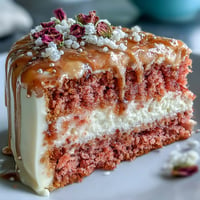
Save My neighbor showed up one Saturday morning with a bag of blood oranges from her tree, and I had no plan for them beyond juice. The yogurt was already on the counter for breakfast, the loaf pan was clean, and somehow the idea arrived fully formed. An hour later, my kitchen smelled like a citrus grove in winter, and I understood why people bake on weekends. That cake, still warm and crackled on top, became the reason I now keep Greek yogurt stocked year-round.
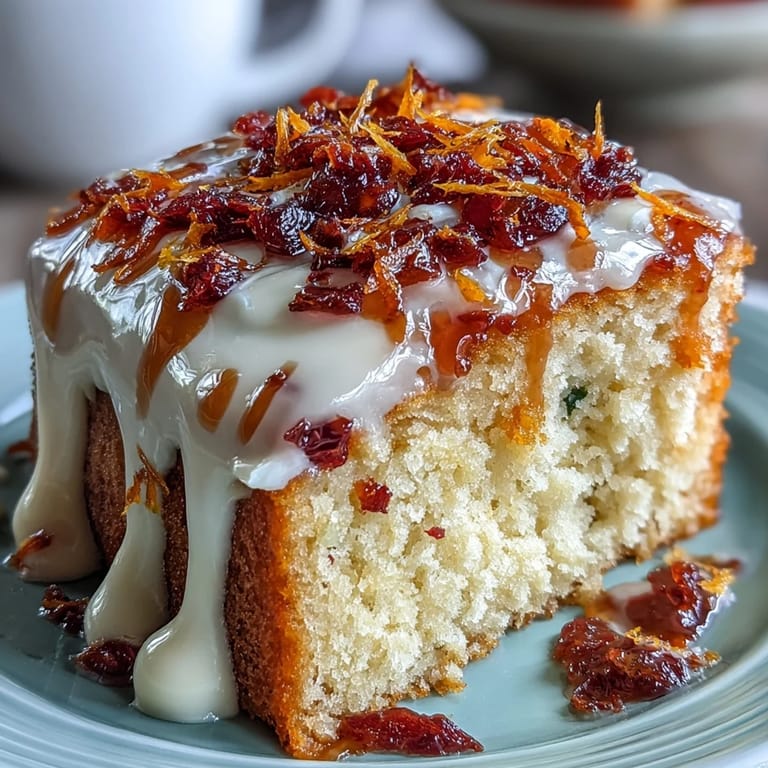
I brought this to a potluck once, still warm in the pan, wrapped in a towel. Someone asked if I had a bakery connection, and I laughed because I had made it in under two hours that morning while drinking coffee. The blood orange icing had barely set, leaving glossy streaks down the sides, and by the time I left, the pan was empty except for a few sticky crumbs. That is when I learned that citrus cakes do not need to be fussy to feel special.
Ingredients
- All-purpose flour: The foundation that gives structure without heaviness, sifted once to avoid lumps and keep the crumb tender.
- Baking powder: Two teaspoons create a gentle rise, so the cake stays moist and dense in the best way.
- Salt: Just a pinch balances the sweetness and makes the citrus sing louder.
- Plain Greek yogurt: This is the secret to the cake staying soft for days, adding tang and richness without extra fat.
- Granulated sugar: Sweetens without competing with the fruit, dissolving easily into the yogurt base.
- Eggs: Room temperature eggs blend smoothly and help the batter emulsify, so bring them out early.
- Blood orange zest: The oils in the zest carry the most flavor, so zest before juicing and use a light hand to avoid the bitter pith.
- Blood orange juice: Freshly squeezed is non-negotiable here, it brings acidity and color that bottled juice cannot match.
- Vanilla extract: A teaspoon rounds out the citrus and adds warmth to the background.
- Coconut oil: Melted and cooled, it keeps the cake tender and adds a subtle tropical note that pairs beautifully with citrus.
- Powdered sugar: Sifted for the icing to avoid gritty patches, it dissolves into the juice for a smooth, glossy finish.
Tired of Takeout? 🥡
Get 10 meals you can make faster than delivery arrives. Seriously.
One email. No spam. Unsubscribe anytime.
Instructions
- Prep the pan and preheat:
- Butter and flour your loaf pan generously, or use parchment for easy release. Preheat the oven to 350°F so it is ready when your batter is.
- Whisk the dry ingredients:
- Combine flour, baking powder, and salt in a medium bowl, whisking to distribute evenly. Set this aside while you build the wet mixture.
- Blend yogurt and sugar:
- In a large bowl, whisk Greek yogurt and sugar until smooth and slightly airy. This step dissolves the sugar and creates a creamy base.
- Add eggs and citrus:
- Whisk in eggs one at a time, then stir in blood orange zest, juice, and vanilla. The batter will look loose and bright, almost like a custard.
- Fold in the dry ingredients:
- Gradually fold the flour mixture into the wet ingredients using a spatula, stopping as soon as no streaks remain. Overmixing will make the cake tough, so be gentle.
- Incorporate the coconut oil:
- Fold in the melted, cooled coconut oil until just combined. The batter will turn glossy and pourable.
- Pour and smooth:
- Transfer the batter to your prepared loaf pan and smooth the top with a spatula. Tap the pan lightly on the counter to release any air bubbles.
- Bake until golden:
- Bake for 50 minutes, checking with a toothpick at the center. It should come out clean or with a few moist crumbs, not wet batter.
- Cool in stages:
- Let the cake cool in the pan for 10 minutes, then turn it out onto a wire rack. Let it cool completely before icing, or the glaze will slide right off.
- Make the icing:
- Whisk powdered sugar, blood orange juice, and zest until smooth and pourable. Add juice a teaspoon at a time if it is too thick.
- Drizzle and set:
- Pour the icing over the cooled cake, letting it drip down the sides. Let it set for at least 20 minutes before slicing for clean cuts.
 Save
Save The first time I served this, I sliced it too soon and the icing pooled on the plate instead of staying put. My friend laughed and said it tasted like sunshine anyway, and we ate it with forks, scraping up every glossy streak. Now I wait, even when it smells so good I want to cut in early. That patience turns it from a good cake into one people remember, the kind that earns requests and recipe swaps over text.
Choosing Your Citrus
Blood oranges have a short season, usually winter into early spring, and their flavor is sweeter and more floral than regular oranges. If you cannot find them, use Cara Cara or navel oranges, but add a teaspoon of lemon juice to the batter for brightness. The color will not be as dramatic, but the cake will still taste vibrant and citrusy. I have made this with all three, and each version has its own charm, though blood oranges always feel the most special.
Storing and Serving
This cake stays moist at room temperature for two days, covered loosely with foil or a cake dome. If you refrigerate it, the texture tightens slightly, but it keeps for nearly a week. I like it best the day after baking, when the flavors have melded and the icing has set into a thin, crackly glaze. Serve it plain with coffee, or dress it up with fresh berries and a dollop of whipped cream for something that feels more like dessert.
What to Do with Leftover Cake
If you somehow have leftovers, this cake toasts beautifully. Slice it thick, warm it in a skillet with a little butter, and the edges caramelize while the inside stays soft. I have also crumbled it over Greek yogurt with honey for breakfast, which feels indulgent but somehow acceptable. One friend freezes individual slices wrapped in parchment, then thaws them for a quick treat when the craving hits.
- Wrap slices tightly in plastic wrap and foil, then freeze for up to a month.
- Thaw at room temperature for an hour, or microwave for 20 seconds if you are impatient.
- Refresh day-old cake by warming slices in a 300°F oven for five minutes.
 Save
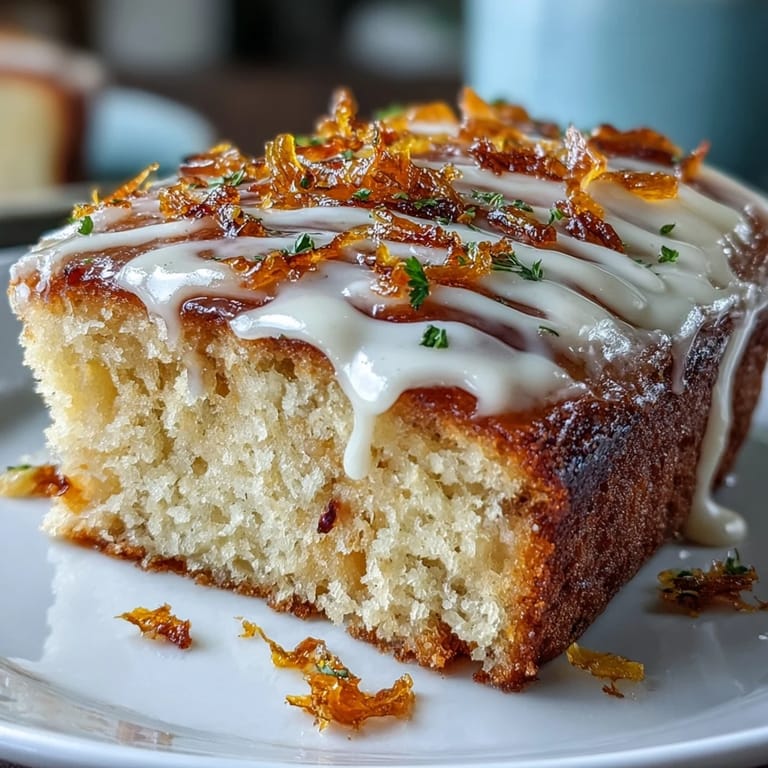
Save This cake has become my answer to winter doldrums and last minute invitations, the thing I make when I want something bright without a lot of fuss. It is never exactly the same twice, sometimes the icing is thicker, sometimes the oranges are sweeter, but it always feels like a small celebration. I hope it does the same for you.
Recipe FAQ
- → Can I use regular oranges instead of blood oranges?
Yes, you can substitute navel oranges or cara cara oranges for blood oranges. The flavor will be slightly less tart and the color won't have that signature ruby hue, but the cake will still be delicious.
- → How do I store this cake?
Store the cake covered at room temperature for up to 2 days. For longer freshness, refrigerate for up to 5 days. Bring to room temperature before serving for the best texture and flavor.
- → Can I make this cake dairy-free?
Substitute dairy-free yogurt for the Greek yogurt and use melted vegan butter instead of coconut oil. The texture may vary slightly, but it will still yield a moist, flavorful cake.
- → Why did my cake turn out dense?
Overmixing the batter can create a dense texture. Fold the dry ingredients into the wet mixture just until combined—some small lumps are perfectly fine. Also ensure your eggs are at room temperature for proper aeration.
- → Can I freeze this cake?
Yes, wrap the completely cooled cake (without icing) tightly in plastic wrap and freeze for up to 3 months. Thaw overnight at room temperature, then add the fresh icing before serving.
- → What makes this cake so moist?
The combination of Greek yogurt and coconut oil creates exceptional moisture. The yogurt adds tenderness while the oil keeps the cake moist for days. Blood orange juice also contributes to the moist crumb.