 Save
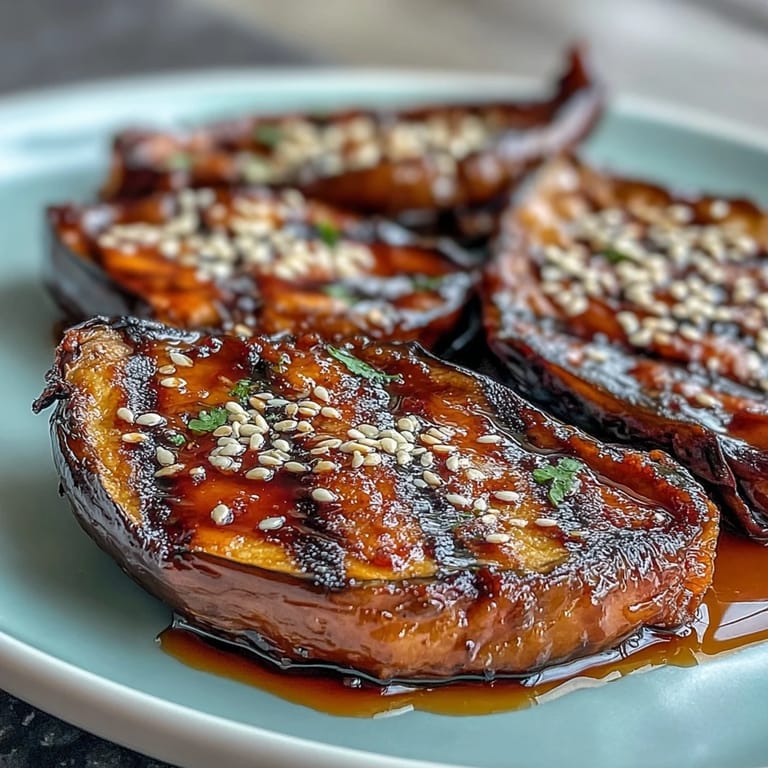
Save My neighbor handed me a perfectly halved Japanese eggplant one summer evening, insisting I try her miso glaze method. What arrived at my table twenty minutes later looked almost too elegant for a weeknight dinner—glossy, caramelized, umami-rich. One bite and I understood why she'd been so insistent. Now whenever I see those slender eggplants at the market, this is the first thing I reach for.
I brought this to a potluck once thinking it was too simple, too quiet compared to everyone else's casseroles. By the end of the night, my empty dish was being complimented more than anything else on the table. That's when I realized the best dishes don't need to shout.
Ingredients
- Japanese eggplants: Look for the long, slender ones—they have thinner skin and fewer seeds than globe eggplants, which means less bitterness and a silkier texture when roasted.
- White miso paste: This is your umami anchor; it's sweeter and milder than red miso, which makes it perfect for a glaze that shouldn't overpower the eggplant itself.
- Mirin: This sweet rice wine rounds out the glaze with a subtle depth—don't skip it or use sugar as a direct swap, they taste completely different.
- Sake: A splash of this Japanese rice wine cuts through the sweetness and adds complexity; if you can't find it, dry white wine works in a pinch.
- Sugar: Just a tablespoon balances the saltiness of the miso and helps the glaze caramelize under the broiler.
- Sesame oil: Use it generously here—it's the bridge between all the flavors and adds a toasty richness that makes people ask what your secret ingredient is.
- Toasted sesame seeds: Buy them already toasted or toast them yourself in a dry skillet for thirty seconds; the aroma tells you exactly when they're done.
- Green onions: These are your brightness at the end, a little sharp freshness against all that savory depth.
Tired of Takeout? 🥡
Get 10 meals you can make faster than delivery arrives. Seriously.
One email. No spam. Unsubscribe anytime.
Instructions
- Get your oven ready and prep the eggplants:
- Preheat to 400°F and line your baking sheet with parchment paper—this matters because the miso glaze can stick. Halve your eggplants lengthwise and score the flesh in a crosshatch pattern, cutting deep enough to create little pockets for oil and heat to reach, but stop before you hit the skin.
- Oil and roast until golden:
- Brush the cut sides with sesame oil, place them cut-side up on the sheet, and roast for 20 to 25 minutes until the flesh is tender and turning golden at the edges. Your kitchen should smell incredible by now, slightly nutty and sweet.
- Make the glaze while they roast:
- Whisk together the miso, mirin, sake, sugar, and remaining sesame oil until you have a smooth, pourable consistency. The mixture should look glossy and unified, with no lumps of miso hiding at the bottom of the bowl.
- Glaze and broil:
- Remove the eggplants from the oven and spread a generous layer of glaze over each cut side—don't be shy here. Switch your oven to broil, return the sheet to the top rack, and watch closely for 2 to 3 minutes until the glaze bubbles and caramelizes into burnished patches.
- Finish with garnish and serve:
- Pull them out the moment the glaze begins to brown; a few seconds too long and you'll cross from caramelized to bitter. Shower with toasted sesame seeds and fresh green onions while they're still warm.
 Save
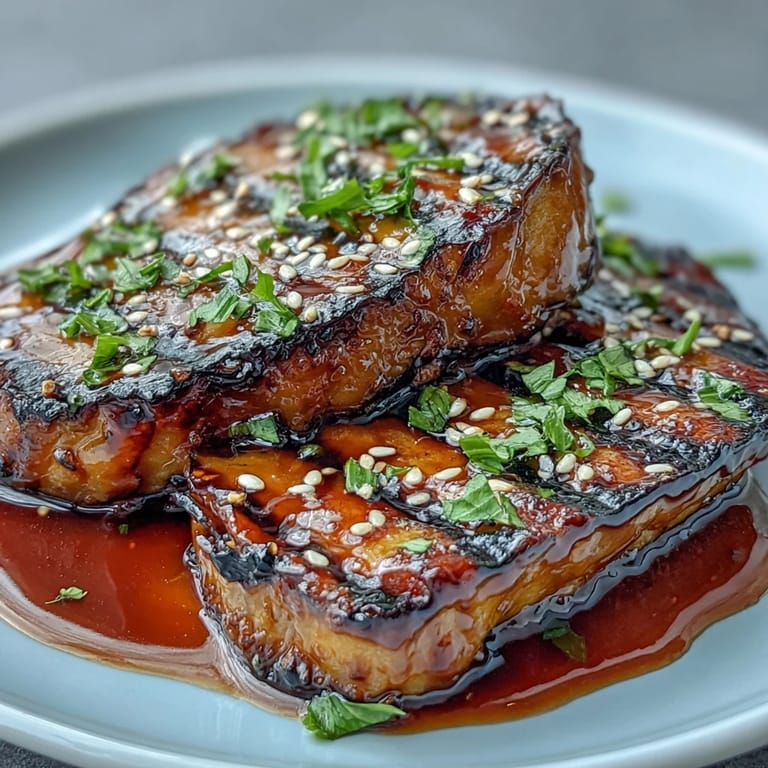
Save My daughter, who claims she doesn't like eggplant, ate three of these at dinner last week without complaint. Sometimes the simplest dishes teach us that our minds change when something is made with real attention.
The Right Eggplant Matters
Japanese eggplants are smaller and sweeter than their globe cousins, with delicate skin that doesn't need peeling. If you can only find regular eggplants, they'll still work, but slice them thinner and add a few extra minutes to the roasting time. The texture won't be quite as silky, but the glaze will still shine.
Building the Glaze
The miso glaze is where all the magic lives—it's the intersection of sweet, salty, and savory that keeps you reaching for another bite. The key is whisking everything together until it's completely smooth before applying it, because lumpy miso paste won't spread evenly or caramelize properly. Think of it like creating a sauce, not just mixing ingredients.
Serving and Storage
These eggplants are best served warm or at room temperature, never straight from the fridge where the glaze hardens. They're perfect alongside steamed rice, part of a Japanese-inspired spread, or honestly just on their own as a light main course. Leftovers keep for three days covered in the refrigerator, though I've rarely had leftovers.
- Reheat gently in a 350°F oven for five minutes to bring back the glaze's shine.
- Try serving these with miso soup and rice for a complete meal that feels both simple and intentional.
- This recipe doubles easily if you're cooking for more people or want extra for the week ahead.
 Save
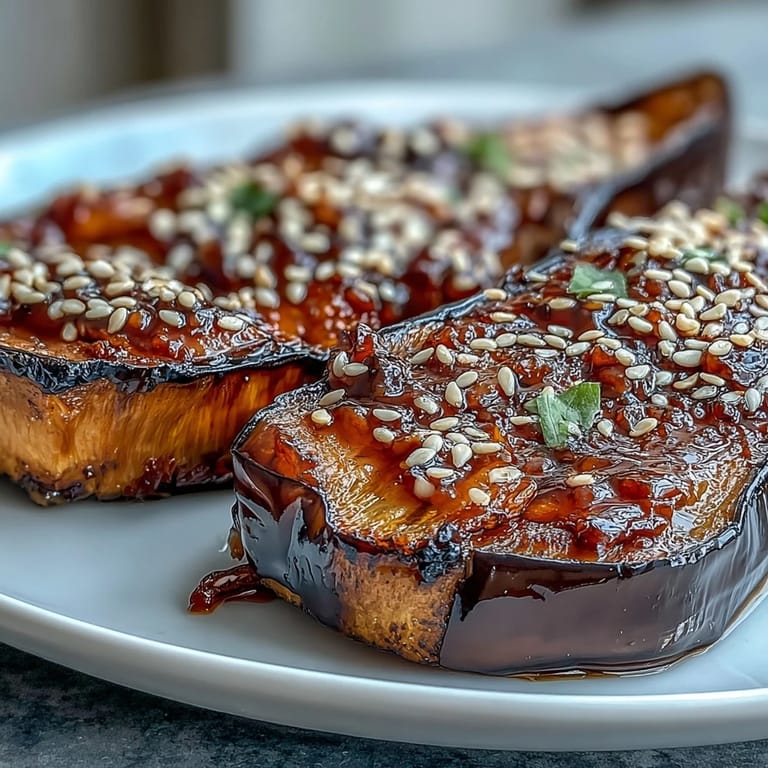
Save This dish taught me that cooking doesn't need to be complicated to be memorable. Sometimes the most elegant meals come from respecting your ingredients and knowing when to stop.
Recipe FAQ
- → What type of eggplant works best?
Japanese or Chinese eggplants are ideal because they have thinner skin, fewer seeds, and a naturally creamier texture when cooked. Regular globe eggplants can be substituted but may require slightly longer roasting time.
- → Can I make the glaze ahead of time?
Yes, whisk the glaze ingredients together and store in an airtight container in the refrigerator for up to a week. Bring to room temperature before using, as it will thicken when cold.
- → How do I prevent the glaze from burning?
Watch closely during the last 2-3 minutes of broiling. The sugar in the glaze can go from perfectly caramelized to burned quickly. Position the rack about 6 inches from the heat source and check every minute.
- → Is this dish gluten-free?
It can be! Use certified gluten-free miso paste and check that your sake and mirin are labeled gluten-free. Traditional varieties may contain barley or wheat-derived ingredients.
- → What should I serve with miso glazed eggplant?
Steamed Japanese rice is the classic pairing, but it also works beautifully alongside grilled fish, tofu, or as part of a larger spread with pickled vegetables and miso soup for a complete Japanese-inspired meal.
- → Can I use red miso instead of white?
White miso is recommended for its sweeter, milder flavor that balances perfectly with the sugar and mirin. Red miso will work but has a stronger, more intense flavor and darker color that may overpower the delicate eggplant.


