 Save
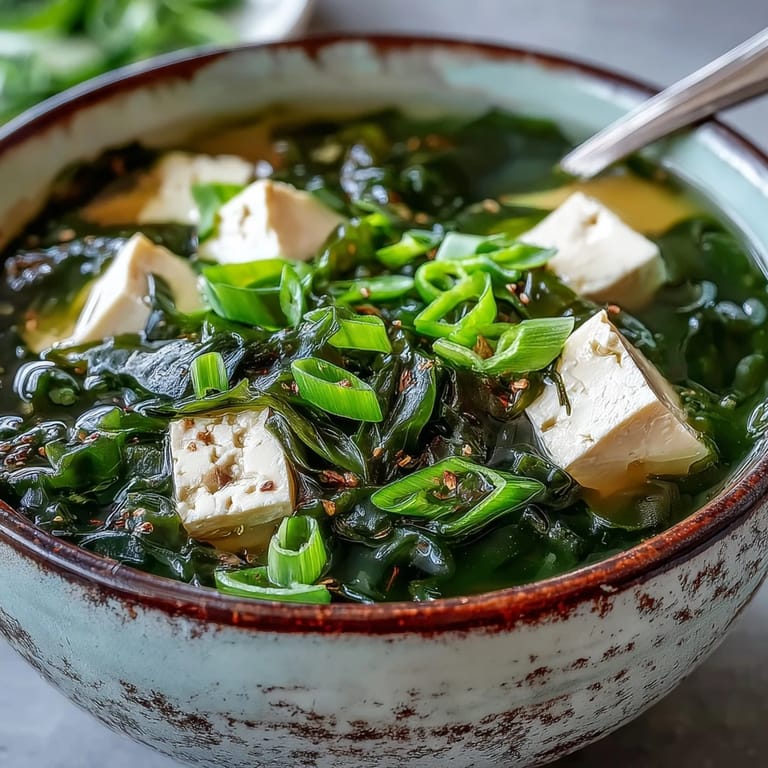
Save My neighbor Yuki once brought over a thermos of wakame soup on a gray afternoon, steam rising through the kitchen as she poured it into bowls with the kind of care that made me understand this wasn't just lunch. The broth was so clear and gentle, almost humble, yet somehow it felt like the most nourishing thing I'd ever tasted. That single bowl taught me that the simplest soups often hold the most wisdom, and I've been making this version ever since.
I made this soup for my daughter's first day of school, packing it in a thermos because she was nervous about the new classroom. When she came home, she told me the aroma had made her feel calm all morning, like carrying a piece of home in her backpack. Since then, wakame soup has become our quiet ritual on uncertain days.
Ingredients
- Dried wakame seaweed (8 g): This delicate sea vegetable plumps up beautifully with a quick soak and releases minerals into the broth. Don't skip the soaking step, or you'll bite into chewy bits that ruin the texture.
- Dashi stock (4 cups): The backbone of this soup, dashi is a gently simmered broth that tastes like the ocean's kindness. You can make your own from kombu and bonito flakes, or use a good quality prepared version to save time.
- Silken or firm tofu (100 g), cubed: Silken tofu melts on your tongue like a whisper, while firm tofu holds its shape better if you prefer texture. Choose whichever matches your mood that day.
- Scallions (2), thinly sliced: These add a bright, fresh note at the end that wakes up all the subtle flavors hiding in the broth.
- White miso paste (2 tbsp): This is the soul of the soup, bringing fermented depth and umami that no amount of salt can replicate. Always dissolve it in hot broth first, never boil it directly, or the living cultures will die and the flavor flattens.
- Soy sauce (1 tsp): A gentle touch of salty richness that balances the earthiness of the miso and seaweed.
- Sesame oil (1 tsp, optional): A drizzle at the end adds a toasted, nutty finish that transforms the whole experience.
Tired of Takeout? 🥡
Get 10 meals you can make faster than delivery arrives. Seriously.
One email. No spam. Unsubscribe anytime.
Instructions
- Wake up the wakame:
- Fill a small bowl with cold water and scatter the dried wakame in like it's taking a nap. After five minutes, it'll unfurl and soften, almost doubling in size, and you'll drain away the water that held any ocean sand.
- Build your broth base:
- Pour the dashi into a medium saucepan and let it warm over medium heat until gentle wisps of steam rise from the surface. You're not looking for an aggressive boil, just a peaceful simmer.
- Introduce the delicate ingredients:
- Add the cubed tofu and the rehydrated wakame to the warm broth, letting them warm through for two to three minutes. The tofu will become even more tender, and the wakame will release its minerals into the soup.
- Honor the miso:
- Scoop a ladle of hot broth into a separate bowl and whisk the white miso paste into it until smooth, breaking apart any stubborn lumps. This gentle approach prevents the miso from becoming grainy and preserves its subtle, fermented character.
- Bring it together:
- Pour the miso mixture back into the pot and stir gently through the whole soup, letting the flavors marry. Add your soy sauce and sesame oil if you're using it, then give everything one final warm minute without letting it boil.
- Finish with intention:
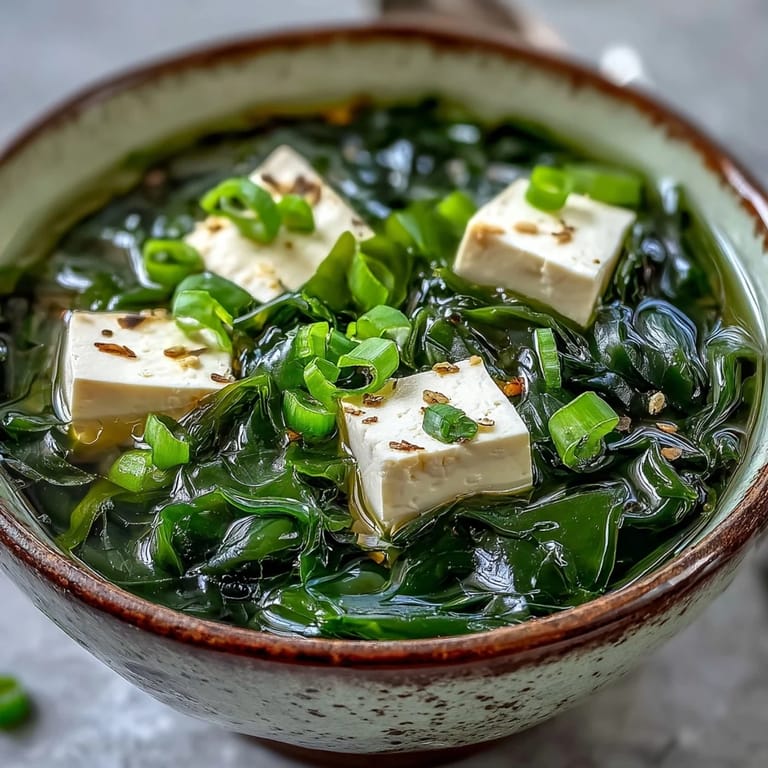
- Pour the soup into bowls and scatter the fresh scallions across the top where they'll keep their snap and brightness. Serve while steam still rises, because that moment of warmth is part of the experience.
 Save
Save There's a quiet moment that happens when you're eating this soup alone at your kitchen table, when the warmth reaches your chest and you realize you're not just eating, you're receiving something. That's when I know I've made it right.
The Comfort of Simplicity
This soup taught me that Japanese cooking isn't about impressing anyone, it's about care expressed through clarity. Every ingredient serves a purpose, nothing is wasted, and the result feels lighter than air but satisfies deeper than a heavy meal ever could. The first time you make it, you might think you're missing something, but trust the quiet.
Customizing Without Losing the Spirit
While the classic version is perfect as written, I've learned you can gently expand it without losing what makes it special. A few mushroom slices, some tender spinach, or thin carrot matchsticks will nestle into the broth and become part of the quiet conversation happening in your bowl. The key is restraint, adding only what you'd actually want to taste and never crowding the broth.
Pairing and Serving Wisdom
This soup is most beautiful when it's not the whole meal, but rather the opening gesture that says you care about nourishing everyone at the table. Serve it in small bowls before the main course, or pair it alongside rice and something simple like steamed fish or roasted vegetables. The broth prepares your palate for whatever comes next, like an overture before the main performance.
- Serve in warmed bowls so the soup stays at its best temperature longer.
- Make a big batch of dashi ahead and freeze it in portions, so you can have this soup ready in minutes whenever you need comfort.
- If you're feeding someone who's sick or sad, this is the soup that says everything your words can't quite reach.
 Save
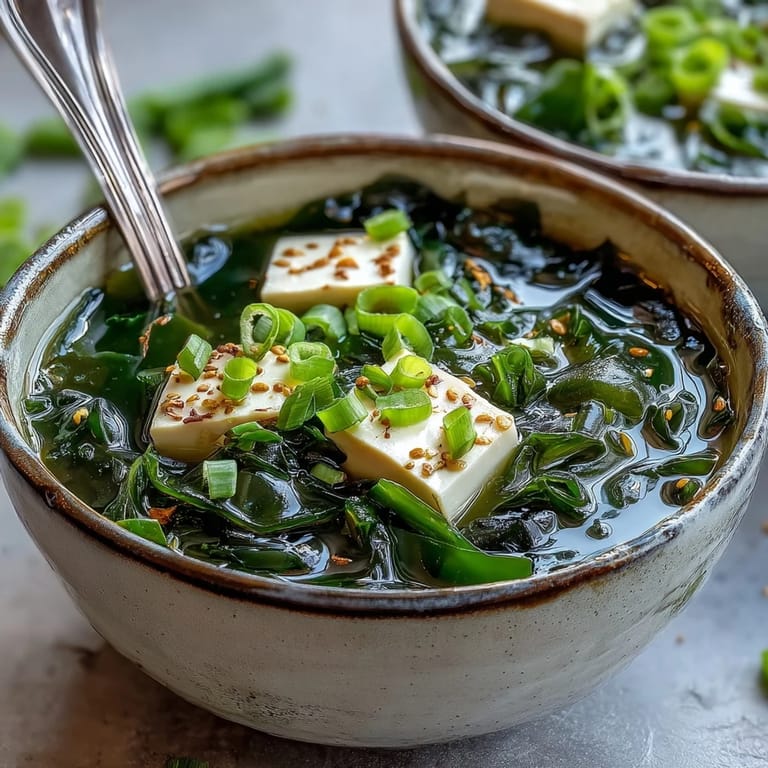
Save Wakame soup is the kind of meal that teaches you cooking doesn't have to be complicated to be profound. Make it whenever someone needs to feel cared for, or whenever you need to care for yourself.
Recipe FAQ
- → What does wakame taste like?
Wakame offers a subtle ocean flavor with mild sweetness and a tender, slightly slippery texture when rehydrated. It absorbs the surrounding broth flavors while contributing its own delicate umami notes, making it perfect for miso-based preparations.
- → Can I use instant dashi instead of homemade?
Instant dashi powder works perfectly for quick preparation. Dissolve it in hot water according to package instructions before adding tofu and wakame. For the most authentic flavor, consider kombu and shiitake-based dashi granules, which provide depth without lengthy preparation.
- → How long does this keep in the refrigerator?
Store cooled portions in airtight containers for up to 2 days. Reheat gently over low heat, avoiding boiling to preserve miso's beneficial enzymes. The tofu may soften slightly but remains delicious. Add fresh scallions when reheating for optimal texture and flavor.
- → Is this suitable for meal prep?
Prepare components separately for best results—rehydrate wakame, cube tofu, and mix seasoning ahead. Combine and heat just before serving. This approach prevents tofu from becoming too soft and maintains the broth's clarity. Misō should always be added at the end to preserve its probiotic properties.
- → What can I substitute for white miso paste?
Yellow miso offers a slightly stronger flavor while maintaining the soup's delicate balance. Red miso provides deeper, earthier notes but may overpower the subtle wakame taste. Start with less than the recipe specifies and adjust to preference, keeping in mind that darker miso varieties are saltier and more intense.
- → Can I make this vegan?
Yes, this dish adapts beautifully to vegan preparations. Use kombu and dried shiitake dashi instead of fish-based stock. Ensure your miso paste contains no bonito flakes—most traditional miso is naturally vegan, but always check labels. The result remains equally nourishing and flavorful.