 Save
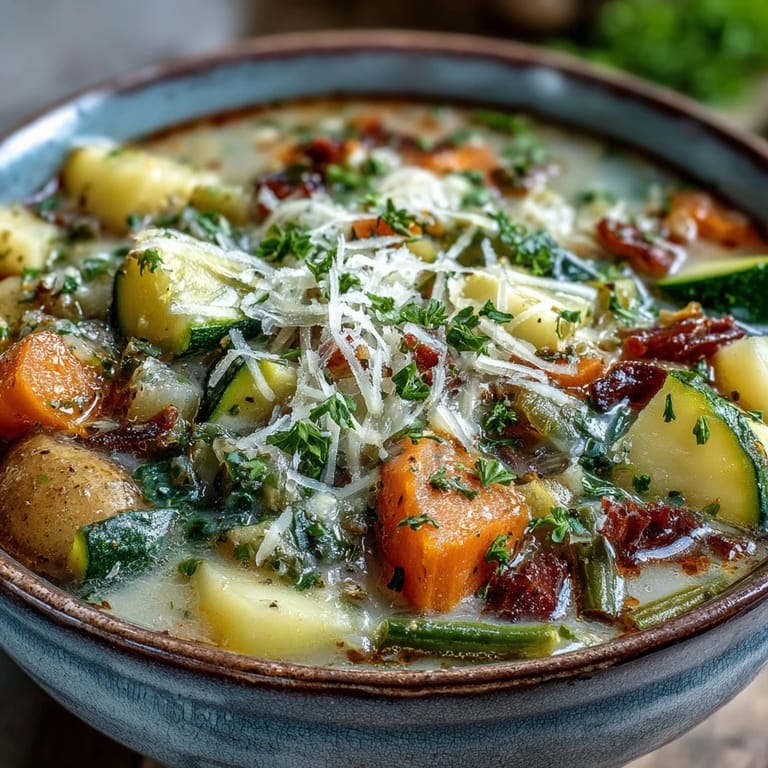
Save My neighbor Maria showed up one chilly October afternoon with a pot of this soup, steam rising from the lid, and I realized soup didn't have to be boring or thin. There was something almost luxurious about how the Parmesan melted into the broth, coating each vegetable piece with this creamy, savory warmth. She laughed when I asked for the recipe, saying it was just vegetables and cheese, nothing fancy, but that's exactly what made it brilliant. Now whenever the weather turns and I need comfort without fuss, this is what lands in my pot.
I made this for my sister when she moved into her first apartment with nothing but a dorm room pot and shaky confidence in the kitchen. The smell alone seemed to calm her down, and by the time she tasted it, she was convinced she could figure out cooking after all. Sometimes the best recipes are the ones that prove you're more capable than you believe.
Ingredients
- Olive oil: Just a tablespoon is all you need to soften the base without making things greasy, and it matters that it's decent quality because you taste it straight.
- Onion and garlic: These two are your flavor foundation, so take thirty seconds to mince them properly instead of rushing, and you'll taste the difference immediately.
- Carrots, celery, zucchini, potato, and green beans: Dice them into roughly the same size so everything cooks at the same pace and the soup feels balanced rather than having some vegetables still crunchy while others fall apart.
- Diced tomatoes: Canned is perfectly fine here, actually better than fresh because the juice adds body to the broth without extra steps.
- Vegetable broth: Four cups is the baseline, but taste as you go because broths vary in saltiness and you might want a sip more if your soup feels too thick.
- Freshly grated Parmesan cheese: This is where the magic lives, so use a microplane and grate it yourself rather than the pre-shredded stuff that doesn't melt as smoothly.
- Parmesan rind: Keep your cheese rinds in a freezer bag, because dropping one into soup adds a depth that's almost impossible to explain until you taste it.
- Dried Italian herbs: A teaspoon is generous, so start with half and taste before adding more, since dried herbs are concentrated and can turn bitter if you overdo it.
- Salt and pepper: Hold back at first and adjust at the end when everything's cooked, because the broth and cheese both bring saltiness that builds as it simmers.
- Fresh parsley: A bright finish that you chop just before serving so it stays green and doesn't turn dark and sad sitting in the pot.
Tired of Takeout? 🥡
Get 10 meals you can make faster than delivery arrives. Seriously.
One email. No spam. Unsubscribe anytime.
Instructions
- Wake up your pot with aromatics:
- Pour that tablespoon of oil into your large pot and let it heat over medium until it's shimmering, then add the chopped onion and minced garlic. You'll know you're doing it right when the kitchen fills with that sweet, slightly sharp smell that makes your mouth water, usually around two to three minutes.
- Build your vegetable base:
- Toss in the carrots, celery, zucchini, potato, and green beans, stirring occasionally for about five minutes until they start to soften at the edges and release their own aromas. You're not trying to cook them through yet, just waking them up and letting them get to know the hot pot.
- Bring it all together:
- Pour in the tomatoes with their juice, add the vegetable broth, then scatter in your dried herbs, salt, and pepper. If you have a Parmesan rind, now's the moment to drop it in like a flavor secret you're about to unwrap.
- Let it simmer gently:
- Bring everything to a gentle boil, then lower the heat and cover the pot, letting it simmer for twenty-five to thirty minutes until you can easily pierce any vegetable with a spoon. This is when you can walk away, tidy your counter, or just stand there and breathe in the smell if you're the type.
- Make it creamy and finish it:
- Fish out that Parmesan rind if you used one, then stir in your freshly grated Parmesan cheese, watching it melt and turn the broth from thin and brothlike into something more luxurious and coating. Taste as you go and adjust the salt and pepper to your preference.
- Serve with joy:
- Ladle the soup into bowls, top each one with a handful of fresh parsley and another generous sprinkle of Parmesan, then serve while it's hot and the cheese is still melting into the vegetables.
 Save
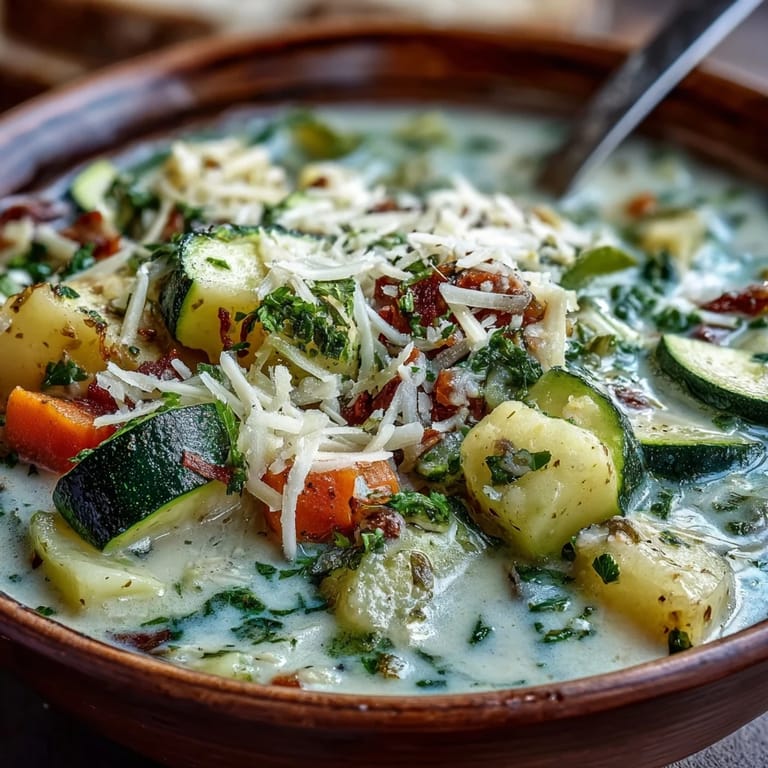
Save There's a moment in every good soup where you stop thinking about the recipe and start thinking about the people you'll feed it to. That's when you know it's working.
Why This Soup Became My Go To
I used to think comfort food meant heavy cream and butter, but this soup proved me wrong by being creamy and light at the same time. The vegetables stay distinct instead of dissolving into mush, and the Parmesan creates this silky feeling without any actual cream, which felt like kitchen wizardry the first time I realized what was happening. It's the kind of dish that works in fall when you want warmth, but also in spring when you don't want something that leaves you feeling sluggish afterward.
How to Make It Yours
Once you've made this twice and gotten comfortable with the rhythm, start experimenting with what you have. I've added white beans in the last few minutes for extra heartiness, swapped half the green beans for broccoli, and once threw in a handful of spinach right before serving. The bones of this recipe are so solid that you can rearrange the vegetables and it still tastes like home cooking.
Keeping Leftovers and Serving Ideas
This soup keeps beautifully in the fridge for four days and actually tastes better the next day when the flavors have melded into something deeper. Reheat it gently on the stove, adding a splash of broth if it's thickened too much, and always taste before seasoning because things shift in the fridge. A crusty piece of bread is non-negotiable, and if you're feeling fancy, a simple green salad alongside makes it a complete meal that feels more like cooking than opening cans.
- Store leftovers in an airtight container and reheat on low to preserve the vegetables' texture instead of nuking them into sadness.
- Freeze in portions for up to three months, but leave a tiny bit of space in the container because soup expands slightly as it freezes.
- Add fresh parsley and extra Parmesan right before eating because reheated soup benefits from that little jolt of brightness and richness.
 Save
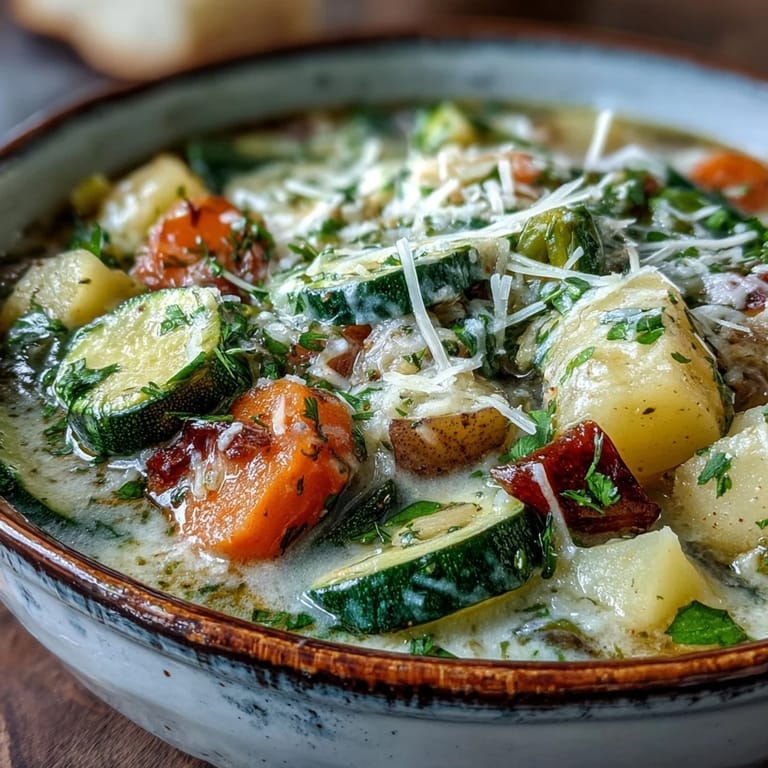
Save This is the kind of soup that reminds you that the simplest ingredients, treated with a little attention and care, become something people remember. Make it once for yourself, then make it for someone else.
Recipe FAQ
- → Can I use other vegetables in this soup?
Yes, feel free to substitute or add vegetables like spinach, kale, bell peppers, or mushrooms based on your preference and seasonal availability.
- → How do I store leftover soup?
Store in an airtight container in the refrigerator for up to 4 days. Reheat gently on the stovetop, adding a splash of broth if needed to adjust consistency.
- → Can I freeze this soup?
Yes, this soup freezes well for up to 3 months. Cool completely before transferring to freezer-safe containers. Thaw overnight in the refrigerator before reheating.
- → What can I use instead of the Parmesan rind?
If you don't have a Parmesan rind, simply increase the grated Parmesan cheese by 2-3 tablespoons, or add a bay leaf for extra depth of flavor.
- → How can I make this soup vegan?
Replace the Parmesan cheese with a plant-based alternative or nutritional yeast, and ensure your vegetable broth is certified vegan.
- → What type of pasta works best if I want to add it?
Small pasta shapes like ditalini, orzo, or small shells work perfectly. Add them during the last 10 minutes of simmering and cook until tender.