 Save
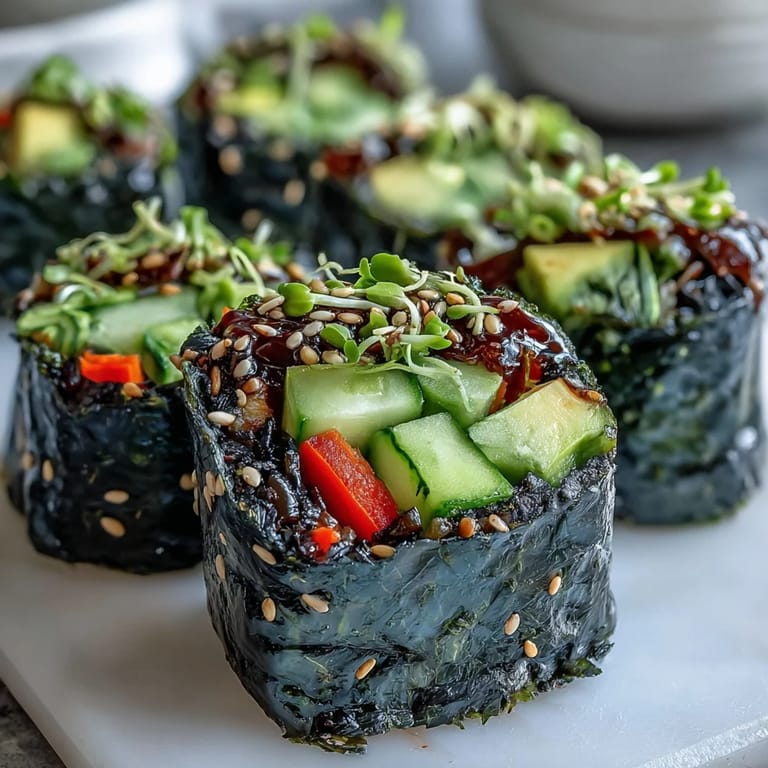
Save There's something almost meditative about rolling nori by hand, watching the vegetables tumble into place like a little edible scroll. A friend taught me this during a lazy Sunday afternoon when we realized we had nothing but seaweed and whatever was lingering in the crisper drawer. By the time we'd made our eighth roll, we were laughing at our slightly lopsided creations, but they tasted infinitely better than anything from a restaurant because we'd made them together.
I brought these to a potluck once thinking nobody would touch them, but they disappeared faster than the brownies. Someone asked for the recipe, then someone else, and suddenly I became the person known for making nori rolls at gatherings—which honestly, I'm not upset about.
Ingredients
- Nori sheets: The glossy, roasted seaweed that becomes your edible wrapper—buy the better quality stuff because you'll taste the difference immediately.
- Fresh cucumber: Julienne it thin so it stays crisp and doesn't make everything soggy as the rolls sit.
- Ripe avocado: This is non-negotiable for creaminess; hard avocados will crack and frustrate you.
- Mixed sprouts: Alfalfa, radish, or broccoli sprouts add a peppery bite and texture that makes each bite interesting.
- Carrot: The natural sweetness balances the umami from the nori and salty soy sauce.
- Red bell pepper: Julienne it into thin strips so it doesn't overpower the delicate vegetables around it.
- Sushi rice: Optional but transforms these from a snack into a more substantial meal; season it with rice vinegar for that authentic tang.
- Toasted sesame seeds: A small sprinkle adds nutty flavor and visual appeal without overwhelming anything.
- Soy sauce or tamari: Your dipping sauce—use tamari if you need gluten-free, and don't skip this component.
Tired of Takeout? 🥡
Get 10 meals you can make faster than delivery arrives. Seriously.
One email. No spam. Unsubscribe anytime.
Instructions
- Prepare your rice if using:
- Mix the cooked rice with rice vinegar while it's still warm so the grains absorb the flavor, then let it cool to room temperature. Warm rice makes nori soggy, so patience here matters.
- Set up your rolling station:
- Place your bamboo mat on a clean surface with the slats running horizontally, then lay a nori sheet shiny side down. The shiny side is important because it signals where the rice should go.
- Spread your rice layer:
- If using rice, dampen your fingers slightly and spread a thin, even layer across the lower third of the nori, leaving about two centimeters clear at the top. This border is your glue for sealing the roll shut.
- Arrange your fillings:
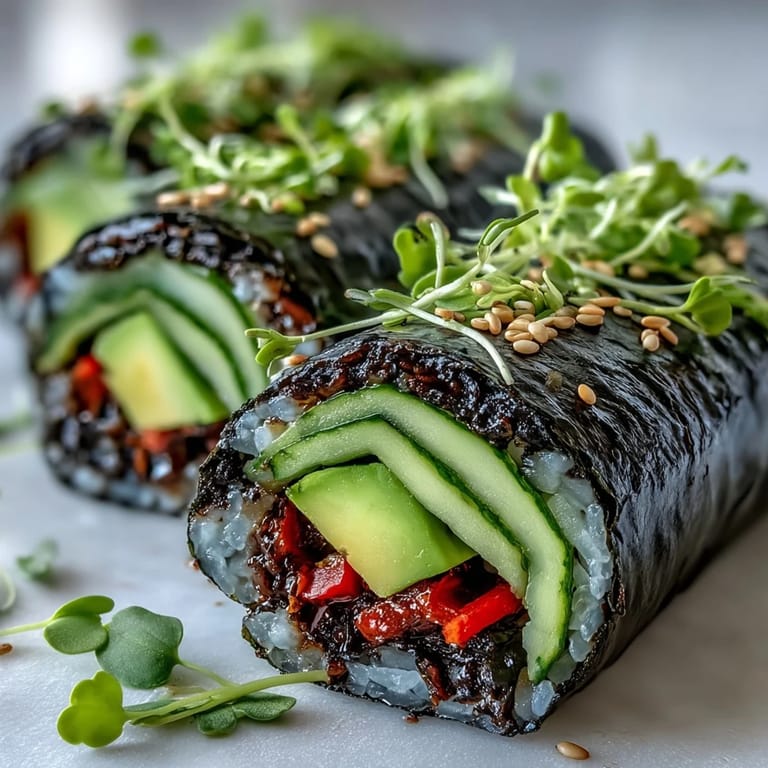
- Lay your cucumber, avocado, sprouts, carrot, and bell pepper in a thin horizontal line across the rice, pressing them down gently. The filling line should be about one finger's width thick, not heaped—restraint here prevents bulging rolls.
- Roll with intention:
- Lift the edge of the mat closest to you and roll the nori tightly over the fillings, using the mat to guide and compress as you go. When you reach the top edge, dab a tiny bit of water on the bare nori to seal it shut like an envelope.
- Slice with a wet knife:
- A damp, sharp knife prevents the nori from cracking and the fillings from scattering everywhere. Cut each roll into eight pieces with a gentle sawing motion rather than a heavy chop.
- Serve right away:
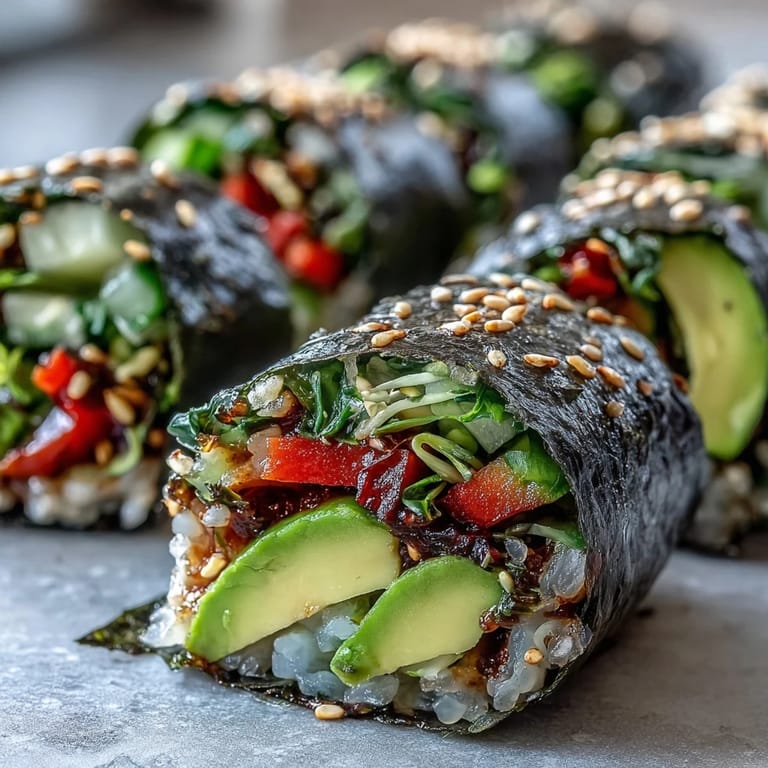
- These are best enjoyed within a few hours while everything still has texture and personality. Plate them cut side up so people can see all those beautiful colors.
 Save
Save These rolls became my comfort food during a period when I was learning to cook more intentionally. There's something grounding about standing at the counter with a mat and vegetables, creating something that feels both simple and special.
Making It Grain-Free
Skip the sushi rice entirely and just pile extra vegetables onto the nori—the rolls become lighter and the fresh flavors shine even brighter. I actually prefer them this way on warmer days when rice feels too heavy, and you'll find the texture contrast between the crispy nori and juicy vegetables becomes the star.
Storage and Do-Ahead Tips
You can prep all your vegetables several hours in advance and keep them in separate containers, then assemble the rolls about thirty minutes before serving. The moment nori meets moisture, it begins its slow transformation from crispy to chewy, so timing your assembly around when people will actually eat them makes all the difference.
Ways to Make Them Your Own
Once you've made these a few times, you'll start improvising based on whatever looks good at the market. I've added thinly sliced mango for sweetness, marinated mushrooms for earthiness, and even crispy tofu strips when I wanted extra protein and texture contrast.
- Marinated mushrooms or baked tofu strips add heartiness without changing the fresh aesthetic.
- A tiny drizzle of sesame oil inside the roll adds richness without overwhelming the vegetables.
- Serve them alongside a crisp white wine or cold green tea for a complete, elegant snack.
 Save
Save These rolls remind me that the best meals don't require fire or timers—just fresh ingredients and your own two hands. Make them once and you'll understand why they're so beloved.
Recipe FAQ
- → What vegetables work best inside nori rolls?
Julienned cucumber and carrot provide classic crunch, while ripe avocado adds creaminess. Mixed sprouts like alfalfa or radish contribute fresh texture, and thinly sliced red bell pepper offers sweetness and color contrast.
- → Can I make these rolls without sushi rice?
Absolutely—omit the rice entirely for a lighter, grain-free version that emphasizes the fresh vegetables. Simply layer your julienned vegetables directly onto the nori sheet and roll tightly.
- → How do I prevent nori rolls from falling apart?
Roll tightly using a bamboo mat or clean towel, and moisten the top edge with water before sealing. Slice with a sharp, damp knife to prevent tearing, and serve immediately for best texture.
- → What can I add for extra protein?
Marinated tofu strips, seasoned mushrooms, or cooked edamame work beautifully. For non-vegan options, thin strips of cooked egg or seafood can be incorporated alongside the vegetables.
- → How should I store leftovers?
Nori rolls taste best fresh but can be refrigerated for several hours. Wrap tightly in plastic or place in an airtight container. Note that the nori may soften over time, so add crisp vegetables just before serving if making ahead.