 Save
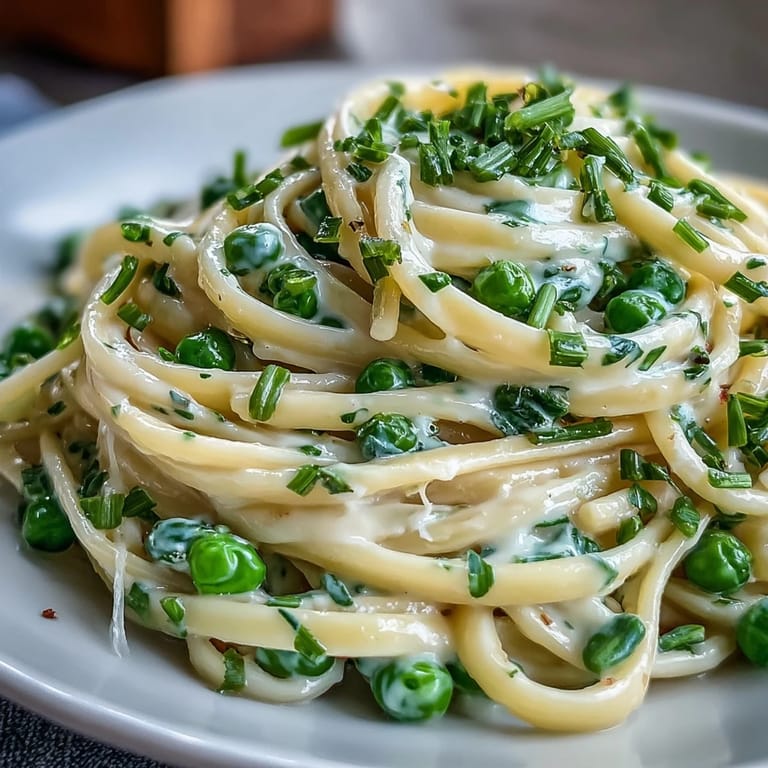
Save There& 39;s something magical about the spring afternoon light streaming through my kitchen window while I toss together a meal that celebrates fresh flavors. Making this Spring Pasta with Lemon Cream Sauce and Peas, I was instantly transported by the scent of lemon zest brightening the air as I whisked the cream—those little details always linger. Sometimes, the sound of bubbling pasta and the gentle sizzle of garlic are enough to lift my mood, reminding me how food can usher in the season. The idea for this dish came to me when peas were at their absolute sweetest at the market, almost daring me to create something fresh. I found myself reaching for baby spinach and chives to complete the ensemble, each ingredient adding a layer of green and fragrance that just sings of spring.
I vividly recall serving this pasta to a group of friends on a rainy Sunday—it had been a long week and everyone showed up a little frazzled, looking for comfort. After just one bite, conversation turned to laughter, and the zesty brightness seemed to cut right through the grayness outside. The kitchen felt warmer and lighter, and even the neighbors commented on the inviting aroma drifting through the hall. We ended up sharing stories late into the evening, plates scraped clean. It became clear to me that a meal like this wasn& 39;t just food—it was a mood lifter, practically an edible celebration of spring.
Ingredients
- Pasta: Linguine or fettuccine wraps the sauce perfectly; cook it al dente so the texture stays lively in every bite.
- Green peas: Use fresh peas if you can—they& 39;re sweeter and pop when cooked—but frozen peas keep their color and are just as tasty.
- Baby spinach: Roughly chopping spinach makes it wilt beautifully without losing its texture; I learned to toss it in just at the end so it doesn& 39;t overcook.
- Fresh chives: These bring a mild onion flavor and a pretty fleck of green—chop them finely for even distribution.
- Unsalted butter: Butter builds richness in the sauce; let it melt gently to avoid browning.
- Garlic: Mince the garlic finely so it melts into the sauce; sauté just until you catch its fragrance, not until it browns.
- Heavy cream: This is the secret to a silky sauce; always warm it slowly to prevent splitting.
- Lemon zest: Zest first, then juice—the oils add vibrant citrus flavor.
- Lemon juice: Two tablespoons brighten the sauce but taste as you go; lemons can vary in strength.
- Grated Parmesan: Parmesan thickens the sauce and adds depth; freshly grated melts better than the packaged kind.
- Salt and black pepper: Adjust these to taste—add a little at first and taste before serving.
- Extra Parmesan, lemon zest, black pepper: These garnishes add crunch, tang, and aroma to the finished dish.
Tired of Takeout? 🥡
Get 10 meals you can make faster than delivery arrives. Seriously.
One email. No spam. Unsubscribe anytime.
Instructions
- Cooking the pasta:
- Fill your largest pot with salted water and let it reach a rolling boil, then drop in the pasta and stir once to prevent sticking. Watch closely and test a strand after 8 minutes—the pasta should be just tender, and reserve half a cup of water before draining.
- Making the lemon cream sauce:
- While the pasta cooks, melt the butter in a wide skillet; add garlic and stir until the aroma is strong but the color stays pale. Pour in heavy cream, keeping the heat gentle so it simmers without boiling, then zest a lemon over the pan to let its oils infuse before adding juice.
- Adding the peas:
- Toss the peas into the sauce and simmer gently—to preserve their color and bite, taste after a minute or two if using frozen. If using fresh, give them another minute and listen for that subtle popping sound as they cook.
- Uniting ingredients:
- Reduce heat, then scrape in the drained pasta, spinach, Parmesan, and chives; use tongs to toss everything together, pouring in pasta water a bit at a time until the sauce clings just right. Watch for the spinach to wilt and turn glossy, a sign it& 39;s ready.
- Final seasoning and serving:
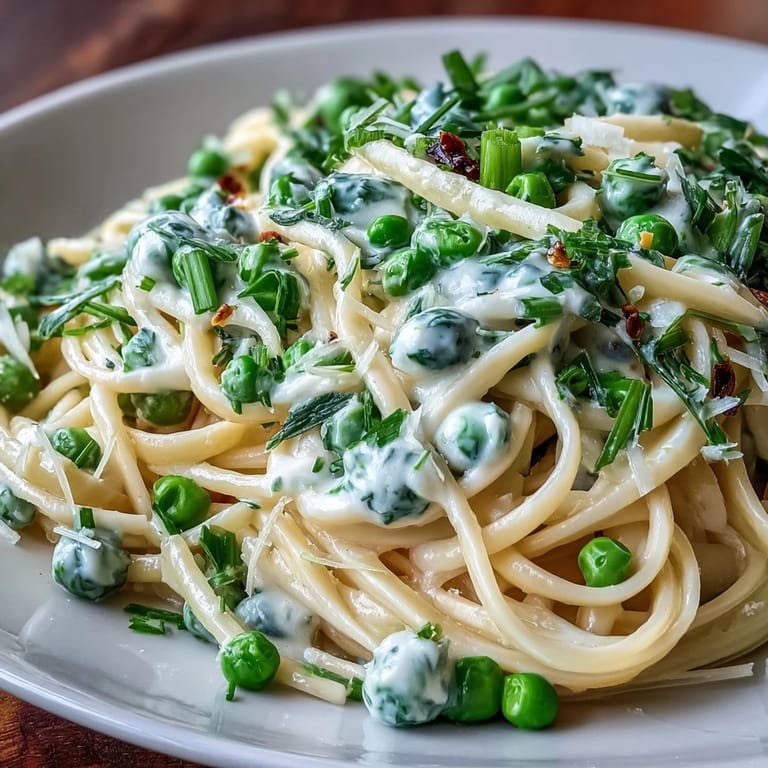
- Season with salt and pepper, tasting for balance. Pile the pasta into warm bowls, and top with a flurry of Parmesan, more lemon zest, and cracked pepper for a finishing touch.
 Save
Save One of my favorite moments was when my little niece insisted on helping—she wanted to sprinkle Parmesan and zest over every bowl, making each serving her own canvas. We ended up with more cheese than usual, but no one complained, and she was so proud that her touch made the dish. Sometimes, cooking becomes an exchange of laughter and small acts of creativity, and the results taste even better. On that day, the kitchen was filled with sunlight and chatter, almost as lively as the flavors themselves. It& 39;s meals like this that remind me food is meant to be shared.
What to Serve Alongside
Pairing this pasta with a crisp white wine turns it into a true celebration; try a Sauvignon Blanc or Pinot Grigio for bright acidity that doesn& 39;t overpower the lemon. Crusty bread is always welcome, both for sopping up the sauce and providing texture. A simple salad with arugula and shaved fennel keeps things fresh and light, balancing the richness of the cream. Make sure you have chilled water on the table—the lemon and herbs call for clean refreshment between bites.
Making It Vegetarian Friendly
Double-check your Parmesan—true Parmigiano Reggiano contains animal rennet, but many stores offer vegetarian alternatives. For extra protein without meat, consider stirring through some sautéed mushrooms or tossing in toasted pine nuts right before serving. The beauty of this recipe lies in its flexibility; swap spinach for arugula or fresh herbs depending on what& 39;s available. Sometimes I even sneak in a handful of fresh herbs at the end, letting their aroma rise with the steam. It& 39;s easy to adapt for dietary needs without losing any nuance or flavor.
Troubleshooting and Quick Fixes
If your sauce ever feels too thick, a splash of the reserved pasta water will thin it instantly—don& 39;t rush, as the sauce should coat each strand without pooling. Lemons can differ in acidity, so taste your sauce after adding juice and adjust bit by bit—too much can overwhelm, too little can leave it flat. Garlic burns fast, so watch the pan and stir constantly; if you happen to brown it, start over for the best flavor. Remember, imperfection is part of the charm, and most kitchen mishaps can be mended.
- Keep the pasta warm while finishing the sauce—it helps everything meld together.
- Always chop chives right before using for maximum freshness.
- Serve immediately for the most vibrant flavors.
 Save
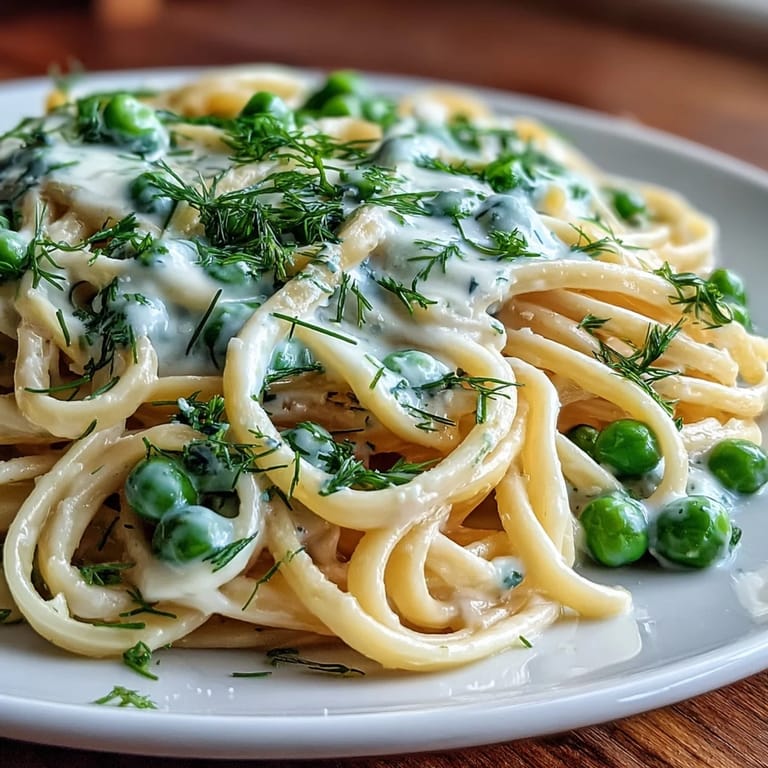
Save This dish feels like spring in a bowl, ready to lift your spirits and bring everyone to the table. Whether it& 39;s a casual weeknight or a sunny weekend, it& 39;s the kind of pasta you& 39;ll return to whenever you crave something light, fresh, and comforting.
Recipe FAQ
- → What type of pasta works best for this dish?
Linguine or fettuccine hold the lemon cream sauce beautifully, but spaghetti can be used if preferred.
- → Can frozen peas be used?
Yes, frozen peas are just as delicious and can be added directly to the simmering sauce.
- → How can I make the sauce creamier?
Use full-fat heavy cream and stir in a touch of reserved pasta water for a rich, silky consistency.
- → Is it possible to add protein?
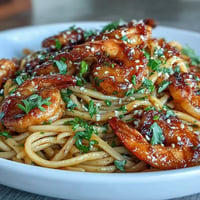
Sautéed shrimp or grilled chicken can be added for extra protein and flavor without overpowering the dish.
- → What can be substituted for spinach?
Try chopped arugula for a peppery twist or use blanched asparagus tips for spring freshness.
- → How is the dish best served?
Serve immediately with extra Parmesan, lemon zest, and freshly cracked black pepper as garnish.